
Guide
Are Prediction Markets Gambling?
Are prediction markets just another form of gambling, or are they something fundamentally different? Explore the arguments, regulatory debates, and key distinctions behind one of the most controversial questions in modern forecasting.

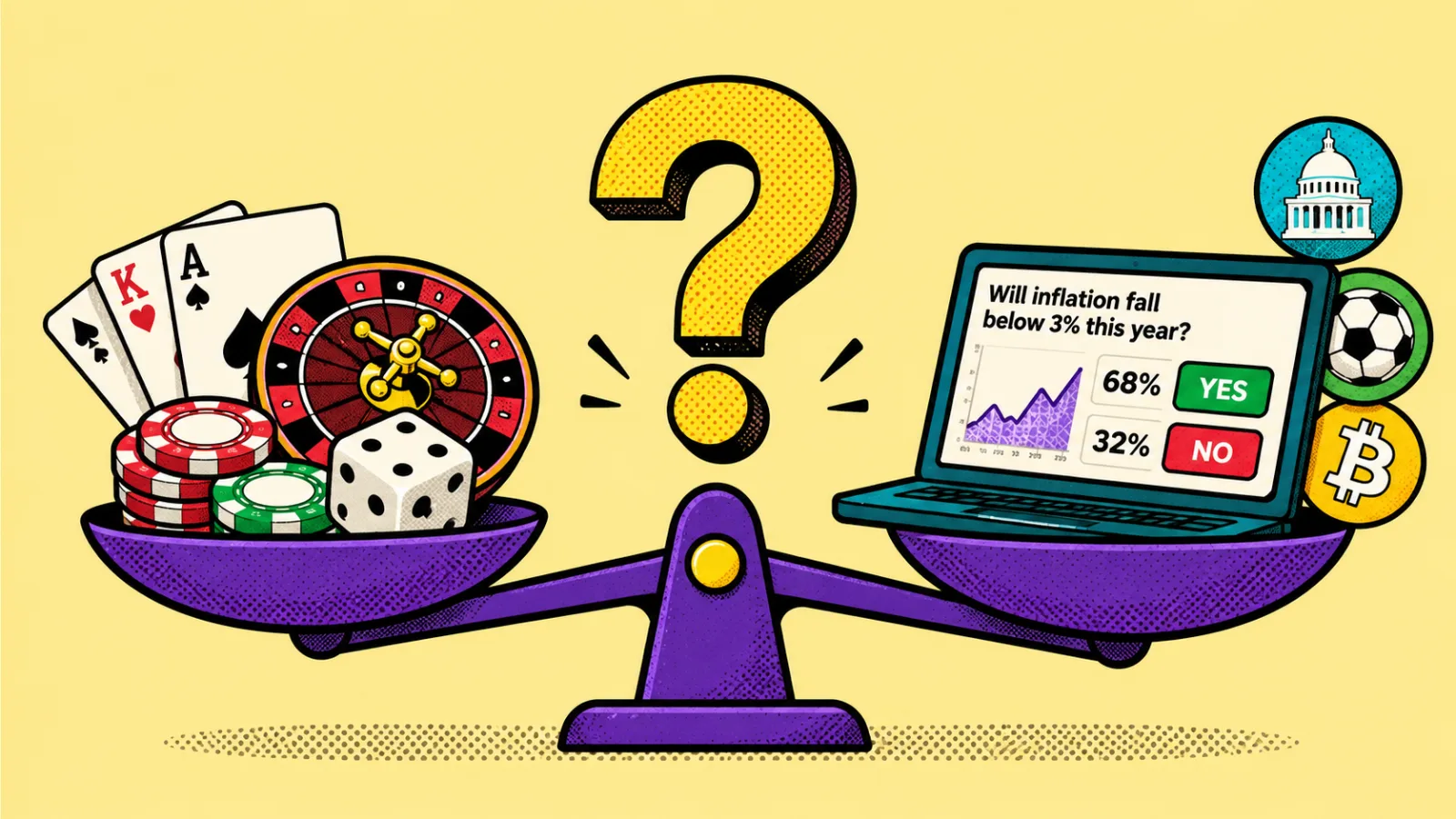
Are Prediction Markets Gambling? Understanding One of the Most Controversial Debates in Forecasting
As prediction markets become more visible online, one question appears again and again:
The comparison seems obvious at first.
Both involve:
- uncertain future events,
- changing probabilities,
- participants risking money,
- outcomes that have not happened yet.
Yet many economists, researchers, and forecasting enthusiasts argue that prediction markets serve a purpose that goes far beyond traditional gambling.
Others remain unconvinced.
The result is an ongoing debate involving:
- regulators,
- academics,
- journalists,
- financial observers,
- and the prediction market community itself.
Understanding that debate requires looking beyond simple labels.
Why People Compare Prediction Markets and Gambling
The comparison starts with uncertainty.
Whether someone is predicting:
an election result, a championship winner, a cryptocurrency milestone, or a geopolitical event,
the future remains unknown.
From the outside, prediction markets can look similar to gambling because both involve making judgments about uncertain outcomes.
Critics often point to several similarities:
- money is involved,
- future events determine outcomes,
- participants can profit or lose,
- emotions often influence decisions.
These similarities explain why the comparison is so common. But similarities alone do not necessarily make two systems identical.
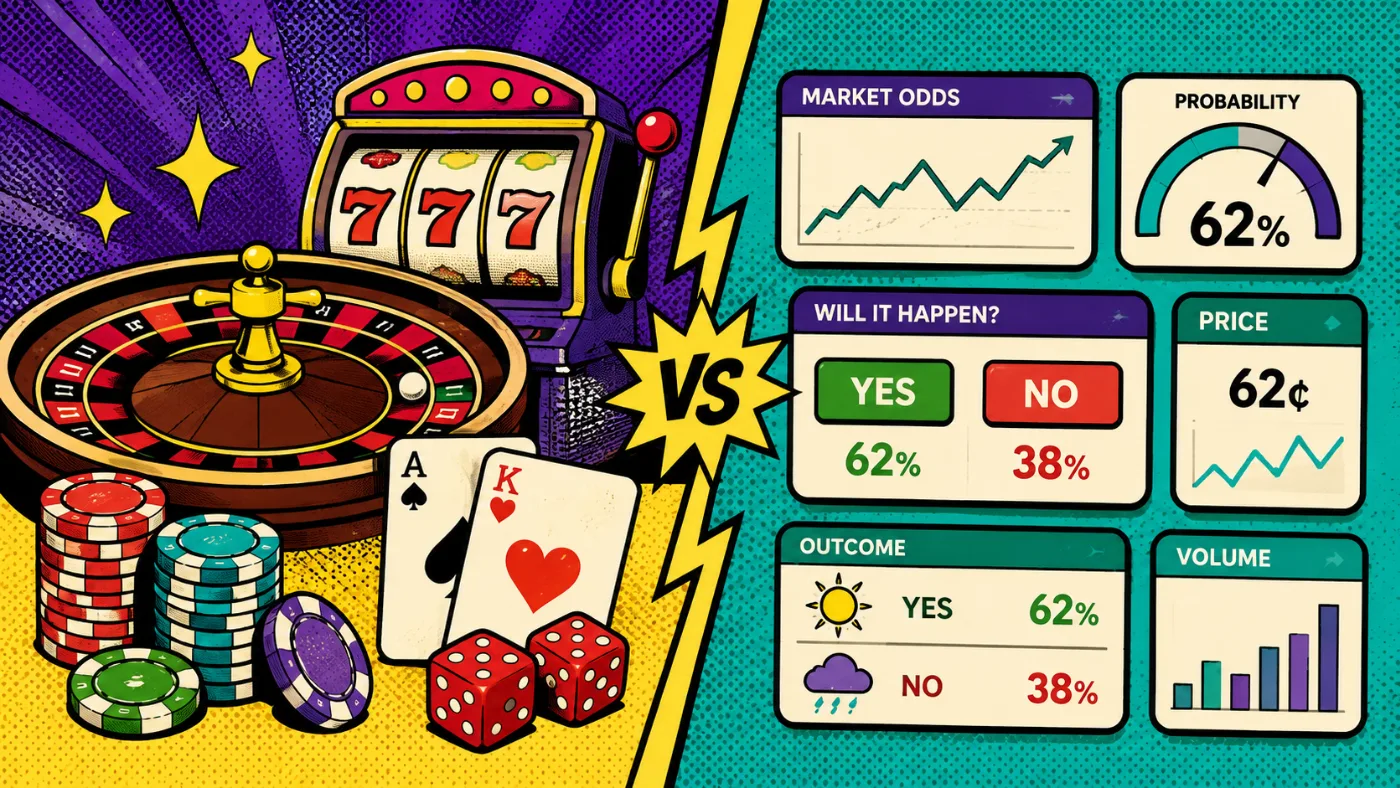
What Is Gambling?
Definitions vary by jurisdiction, but gambling is commonly described as risking money on an uncertain outcome primarily for entertainment or financial gain.
Classic examples include:
- casino games,
- lotteries,
- sports wagering,
- horse racing.
In most cases, the activity centers on chance, probability, and financial risk.
This broad definition is one reason prediction markets often become part of the conversation.
At a high level, both involve uncertainty.
The disagreement begins when people ask what prediction markets are actually designed to accomplish.
Why Supporters Believe Prediction Markets Are Different
Supporters argue that prediction markets serve an informational purpose.
Instead of focusing solely on entertainment, prediction markets attempt to aggregate information and reveal collective expectations about future events.
Researchers have studied forecasting markets for decades because they can provide insight into:
- public expectations,
- probability estimates,
- information aggregation,
- crowd behavior.
Supporters often describe prediction markets as:
- forecasting systems,
- information markets,
- crowd intelligence tools,
- probability discovery mechanisms.
In this view, the primary value comes not from the outcome itself, but from the information generated before the outcome occurs.
Explore for a deeper explanation of probability-based forecasting systems.
Why Critics Still Consider Prediction Markets a Form of Gambling
Critics argue that the distinction is not always clear.
They point out that:
- money is still at risk,
- outcomes remain uncertain,
- participants may be motivated by profit,
- speculation plays an important role.
From this perspective, prediction markets may simply represent a more sophisticated version of event-based wagering.
Some critics also argue that participants often behave similarly across prediction markets, sports betting environments, and speculative financial activities.
This perspective helps explain why the debate remains active.
The Role of Information vs Entertainment
One of the biggest differences in the debate involves purpose. Traditional gambling products are often designed primarily for entertainment.
Prediction markets are frequently discussed in terms of information. For example, journalists, analysts, and researchers may follow prediction market probabilities to understand:
- election expectations,
- geopolitical sentiment,
- economic forecasts,
- technology trends.
Many people now watch prediction markets without ever participating directly. They simply use probability movement as a way to monitor changing expectations.
This informational role is one reason supporters resist describing prediction markets purely as gambling.
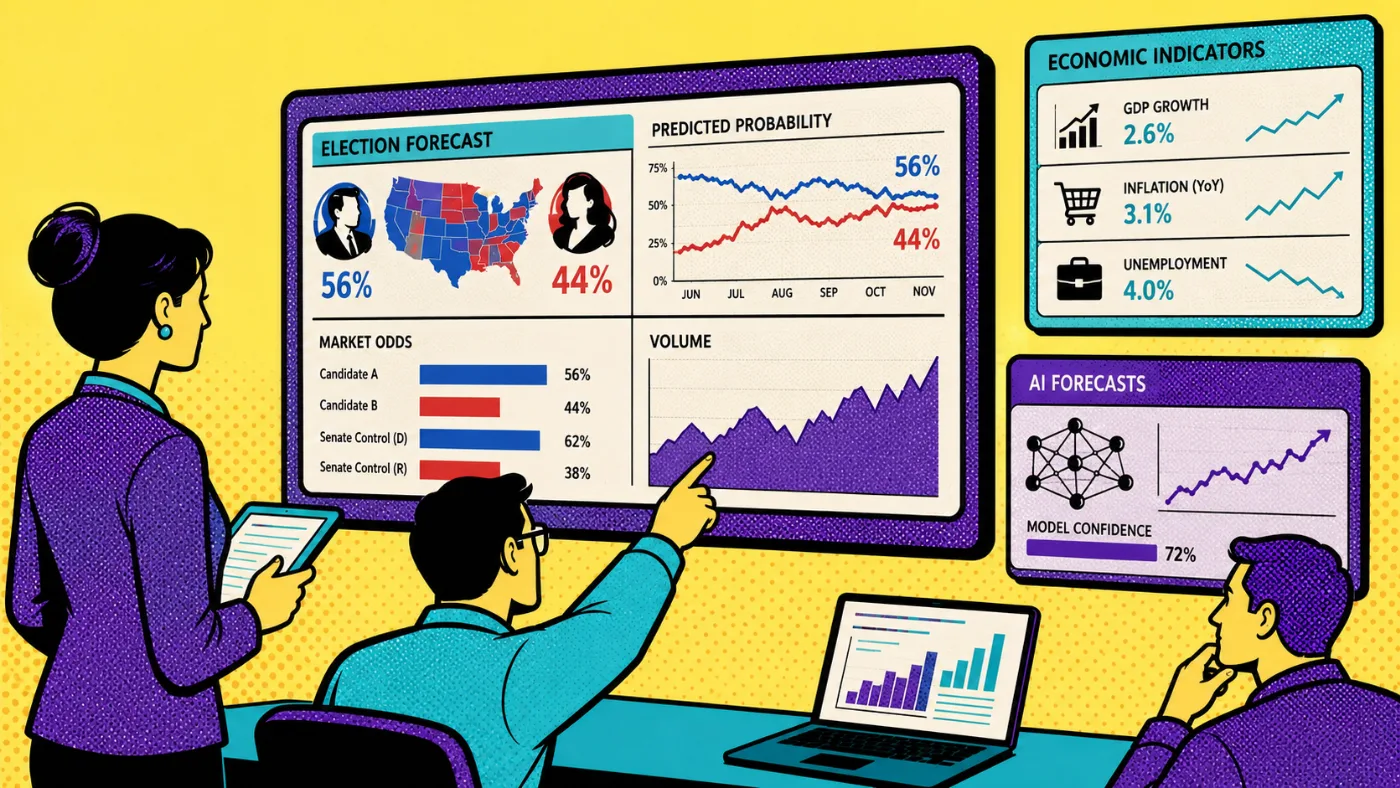
Why Regulators Around the World Disagree
One reason the debate persists is that different jurisdictions classify prediction markets differently.
Prediction markets sit at the intersection of:
- forecasting,
- finance,
- event contracts,
- speculation,
- online platforms.
As a result, regulators often approach them from different perspectives.
- Some focus on:
- consumer protection,
- financial oversight,
- speculative risk.
Others place greater emphasis on forecasting and information functions. This variation helps explain why prediction market regulation differs significantly around the world. Explore to learn more about geographic restrictions and regional access policies.
Prediction Markets, Gambling, and Financial Markets
Interestingly, prediction markets are often compared not only to gambling but also to financial markets.
All three systems involve:
- uncertainty,
- probability,
- changing expectations,
- risk.
Yet each serves a different role.
| Prediction Markets | Gambling | Financial Markets |
|---|---|---|
| Forecast future events | Wager on uncertain outcomes | Allocate capital and value assets |
| Often discussed as information systems | Primarily entertainment-focused | Primarily investment-focused |
| Probability-based | Outcome-based | Asset-based |
| Frequently used as forecasting signals | Rarely used for forecasting | Often used as economic signals |
This overlap is one reason prediction markets remain difficult to classify using traditional categories.
Why the Debate Is Unlikely to End
The disagreement persists because prediction markets combine characteristics from several worlds at once.
They involve:
- uncertainty,
- forecasting,
- speculation,
- information,
- probability.
Depending on which aspect someone focuses on, prediction markets may appear closer to:
- gambling,
- forecasting,
- finance,
- or something entirely unique.
As the industry continues evolving, the debate is likely to continue as well.
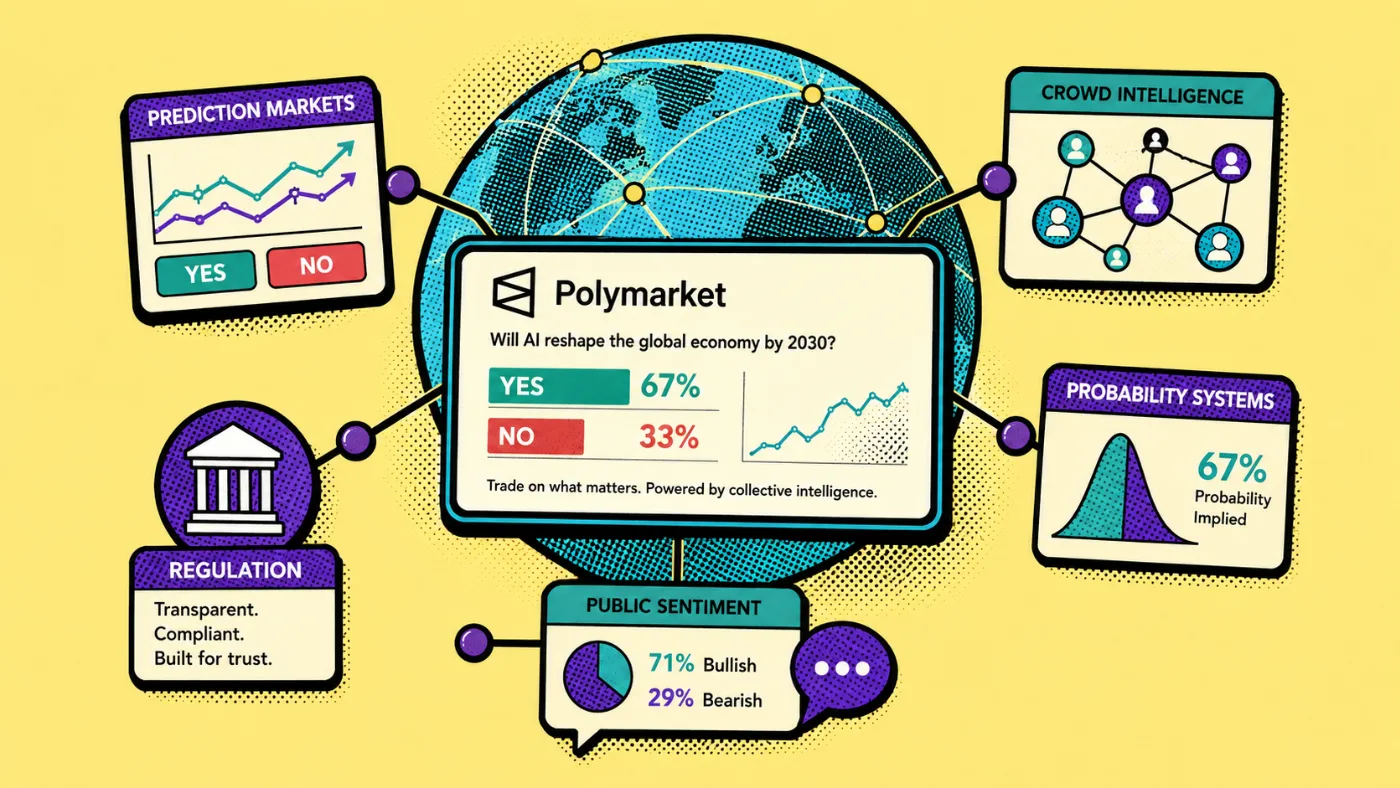
FAQ About Prediction Markets and Gambling
Are prediction markets legally considered gambling?
The answer depends on jurisdiction. Different regulators classify prediction markets differently.
Why do people compare prediction markets to gambling?
Both involve uncertain future events, changing probabilities, and financial risk.
Why do supporters say prediction markets are different?
Supporters argue that prediction markets generate forecasting information and help aggregate collective expectations.
Why is there so much debate around prediction markets?
Prediction markets combine elements of forecasting, finance, speculation, and event-based participation, making classification difficult.
Are prediction markets used only for entertainment?
Not necessarily. Many researchers, analysts, journalists, and observers use prediction markets as information and forecasting tools.
Final Thoughts
The question of whether prediction markets are gambling does not have a universally accepted answer.
Some observers focus on the financial risk and uncertainty involved. Others focus on forecasting, information aggregation, and crowd intelligence.
What is clear is that prediction markets have become something larger than a niche internet phenomenon.
They now sit at the center of ongoing conversations about:
- forecasting,
- regulation,
- public expectations,
- and how societies interpret uncertainty.


