
Guide
Are Prediction Markets the Same as Sports Betting?
Prediction markets and sports betting may look similar at first glance, but they operate differently. Explore how forecasting markets compare to traditional sports wagering and why the distinction remains debated.

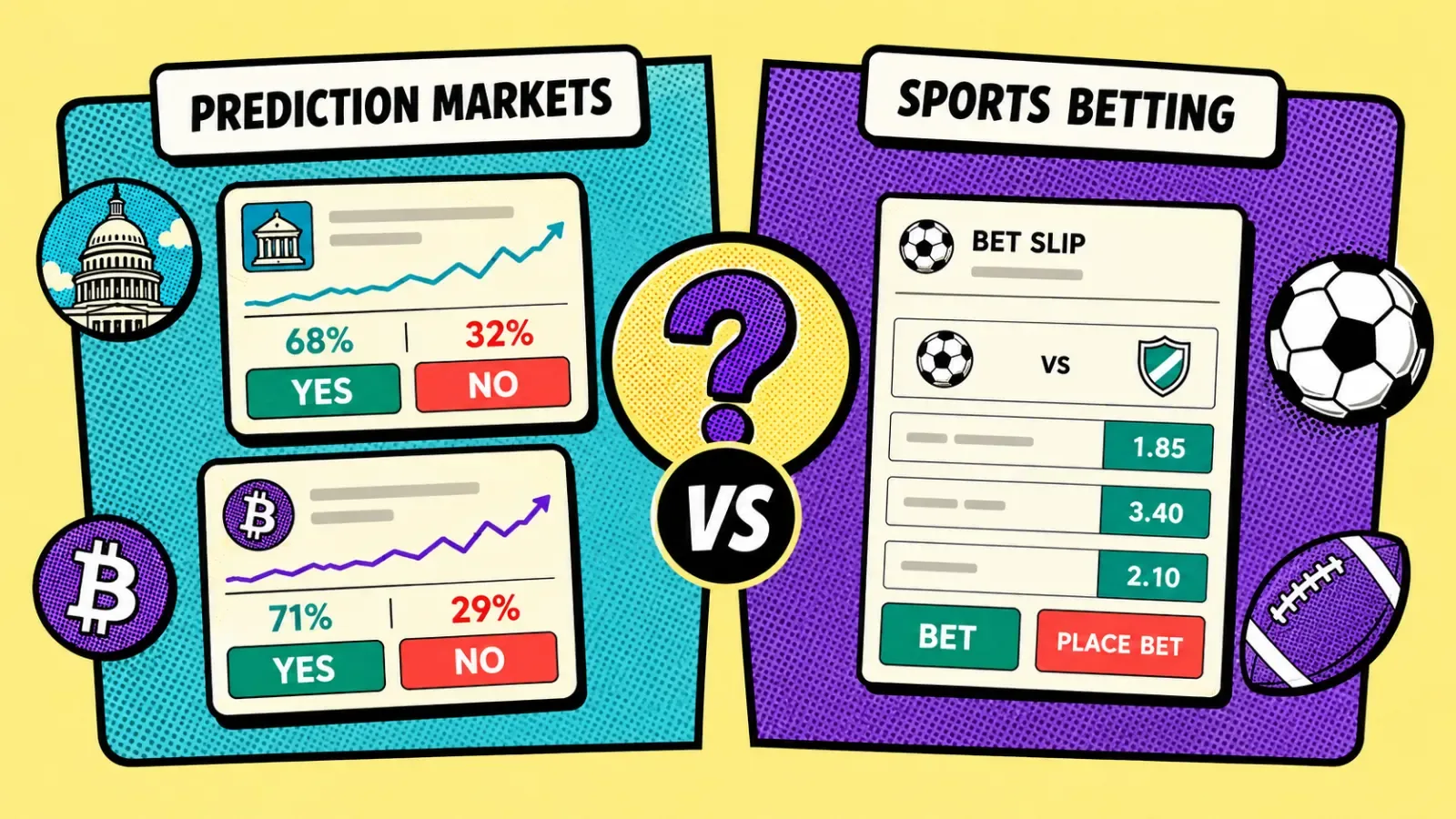
At first glance, prediction markets and sports betting can look remarkably similar.
Both involve:
- future events,
- probabilities,
- winners and losers,
- changing expectations.
A person looking at a prediction market for the first time might reasonably ask:
The answer depends on who you ask.
Supporters of prediction markets often describe them as forecasting systems or information markets.
Critics sometimes argue that they resemble a modern form of wagering on future events.
The reality is more nuanced.
While prediction markets and sports betting share certain characteristics, they were developed for different purposes and often operate in different ways.
Why People Often Confuse Prediction Markets and Sports Betting
The confusion is understandable.
Both systems involve uncertainty.
Both revolve around future outcomes.
And both can display probabilities that change over time.
For example:
- A sports bettor may predict which team will win a championship.
- A prediction market participant may forecast whether a candidate will win an election.
- Both are making judgments about future events.
From the outside, these activities can appear nearly identical.
But beneath the surface, important differences exist.
How Sports Betting Works
Traditional sports betting focuses on sporting events.
Participants place wagers on outcomes such as:
- game winners,
- tournament champions,
- player performance,
- scores and statistics.
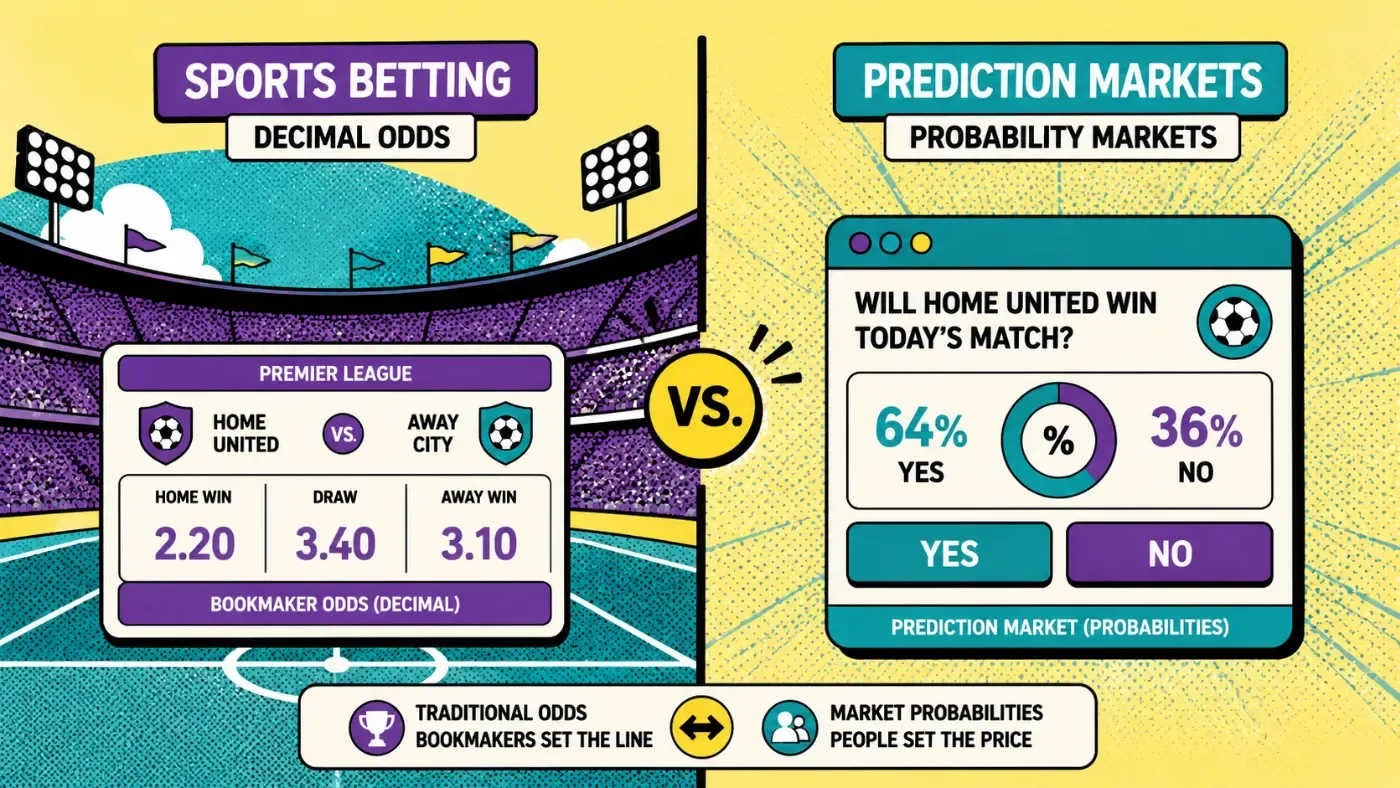
Odds are typically set and managed by bookmakers.
These odds may change over time, but they are generally controlled by the operator rather than by open market participants.
The bookmaker plays a central role in pricing risk and managing exposure.
How Prediction Markets Work
Prediction markets take a different approach.
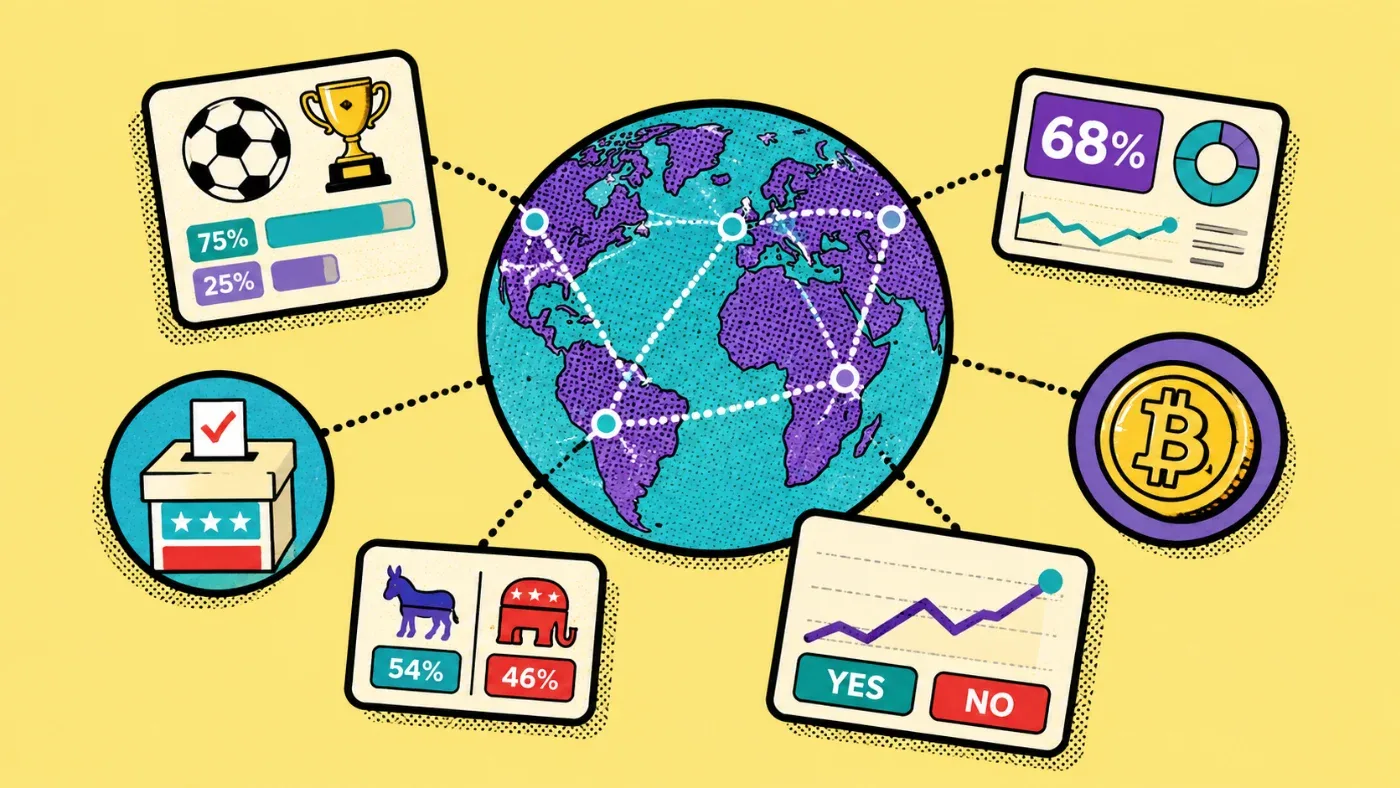
Instead of focusing only on sports, they can cover:
- politics,
- economics,
- technology,
- crypto,
- culture,
- sports,
- global events.
Rather than using bookmaker-managed odds, prediction markets often rely on crowd participation to generate probabilities.
As information changes, probabilities move.
Participants collectively shape market expectations through buying and selling activity.
For a deeper explanation, see /guides/how-prediction-markets-work
Key Differences Between Prediction Markets and Sports Betting
| Prediction Markets | Sports Betting |
|---|---|
| Focus on forecasting future events | Focus on sports outcomes |
| Can cover politics, AI, crypto, economics, culture and sports | Primarily sports-related |
| Probabilities often emerge from market activity | Odds are typically managed by bookmakers |
| Frequently described as forecasting systems | Generally viewed as wagering systems |
| Used by researchers and analysts as information signals | Primarily used for entertainment and wagering |
These distinctions explain why supporters often view prediction markets differently from traditional sports betting.
Why The Debate Continues
Despite these differences, the debate has never fully disappeared.
Critics argue:
- both involve money and uncertain outcomes,
- both can attract speculative behavior,
- both depend on predicting future events.
Supporters respond that prediction markets serve a broader purpose.
Many researchers, economists, and forecasting enthusiasts view prediction markets as tools for aggregating information and measuring collective expectations.
This disagreement is one reason prediction markets continue attracting attention from:
- regulators,
- academics,
- journalists,
- financial observers.
Why Regulators Sometimes Treat Them Differently
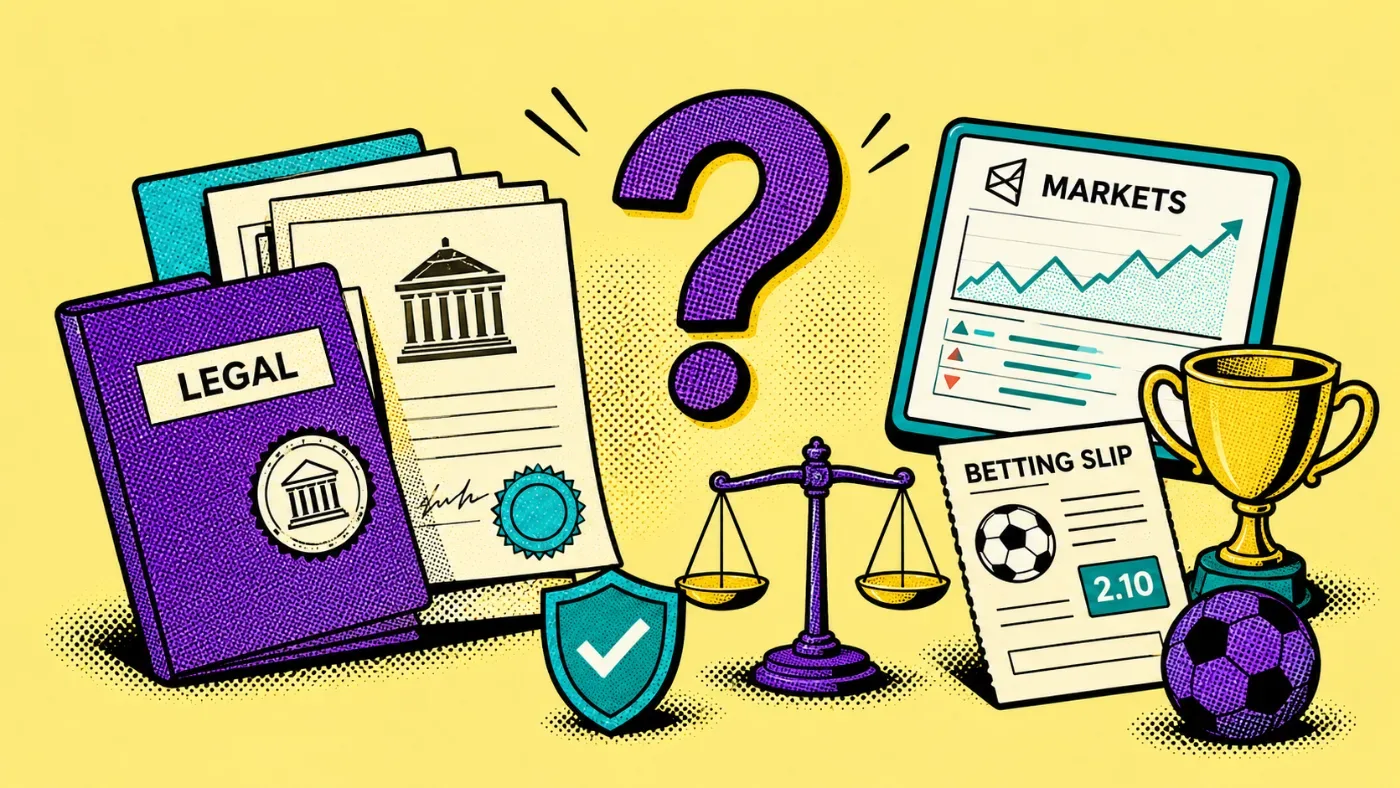
One reason prediction markets generate regulatory debate is that they sit at the intersection of several industries:
- forecasting,
- finance,
- derivatives,
- gaming,
- crypto infrastructure.
Different jurisdictions classify these activities differently.
As a result, prediction market regulation varies significantly around the world.
Some regulators focus on:
- consumer protection,
- financial oversight,
- event contracts,
- speculative risk.
Others place greater emphasis on the forecasting and information aspects of prediction markets.
This regulatory uncertainty remains one of the defining characteristics of the industry.
Why Many People Use Prediction Markets as Information Tools
An interesting trend has emerged over the last few years.
Many people follow prediction markets without actively participating.
Instead, they use probabilities as:
- sentiment indicators,
- forecasting signals,
- crowd expectation trackers,
- public opinion supplements.
During elections, AI launches, geopolitical developments, or major sporting events, prediction market probabilities often become part of broader online discussions.
This behavior is less common in traditional sports betting environments.
Prediction Markets and Sports Betting Both Reflect Uncertainty
Perhaps the most important similarity is that both systems deal with uncertainty. Neither system predicts the future perfectly. Both reflect changing expectations. Both react to new information. And both demonstrate how humans attempt to make sense of uncertain events. That shared foundation is why the comparison continues to attract so much attention.
FAQ About Prediction Markets and Sports Betting
Are prediction markets considered sports betting?
Not necessarily. While both involve forecasting future outcomes, prediction markets often cover a much broader range of topics and are frequently described as forecasting or information markets.
Why do people compare prediction markets to sports betting?
Both systems involve uncertainty, probabilities, and future events, which makes them appear similar to many newcomers.
Can prediction markets cover sports?
Yes. Many prediction market platforms include sports-related events alongside politics, technology, economics, and other categories. Explore sports forecasting markets at: /markets/sports
Why do regulators debate prediction markets?
Because prediction markets combine elements of forecasting, finance, speculation, and event-based contracts, making classification more complex than traditional categories.
Are prediction markets designed only for entertainment?
Supporters often argue that prediction markets provide forecasting and information value beyond entertainment, although debate around their purpose continues.
Final Thoughts
Prediction markets and sports betting share some obvious similarities. Both involve uncertainty. Both involve future events. Both react to changing information.
Yet prediction markets are typically presented as something broader than traditional sports wagering.
They are often described as systems that aggregate expectations, reveal crowd sentiment, and provide real-time signals about how people interpret the future.
Whether one views them primarily as forecasting tools, information markets, speculative systems, or something in between remains part of an ongoing discussion.


