
Guide
Prediction Markets vs Polls
Learn how prediction markets and public opinion polls differ, why they sometimes disagree, and how crowd psychology, social media, and forecasting systems shape public expectations.

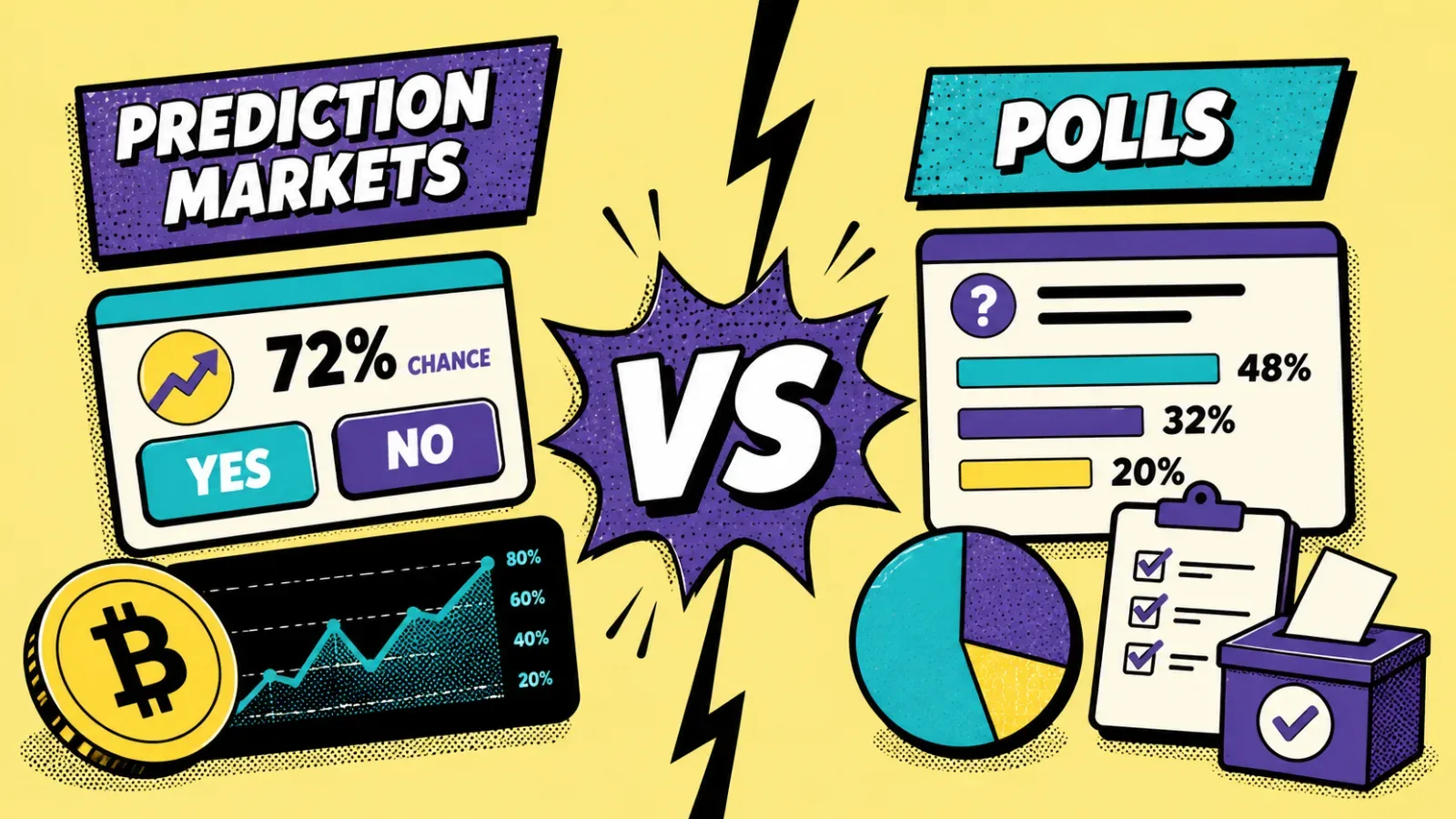
Why They Sometimes Tell Completely Different Stories
Prediction markets and public opinion polls are often discussed together during:
- elections
- geopolitical events
- economic uncertainty
- major global news cycles
But despite appearing similar on the surface, they work very differently. Polls attempt to measure what people currently say they believe. Prediction markets attempt to measure what participants collectively expect to happen. Sometimes those two things align closely. Sometimes they diverge dramatically. During major election cycles, it is not unusual to see polls and prediction market probabilities telling very different stories for days or even weeks at a time. That gap is one reason prediction markets have become such a fascinating part of modern forecasting culture. They do not simply measure opinion. They measure conviction, uncertainty, sentiment, and crowd expectations all at once.
How Public Opinion Polls Work
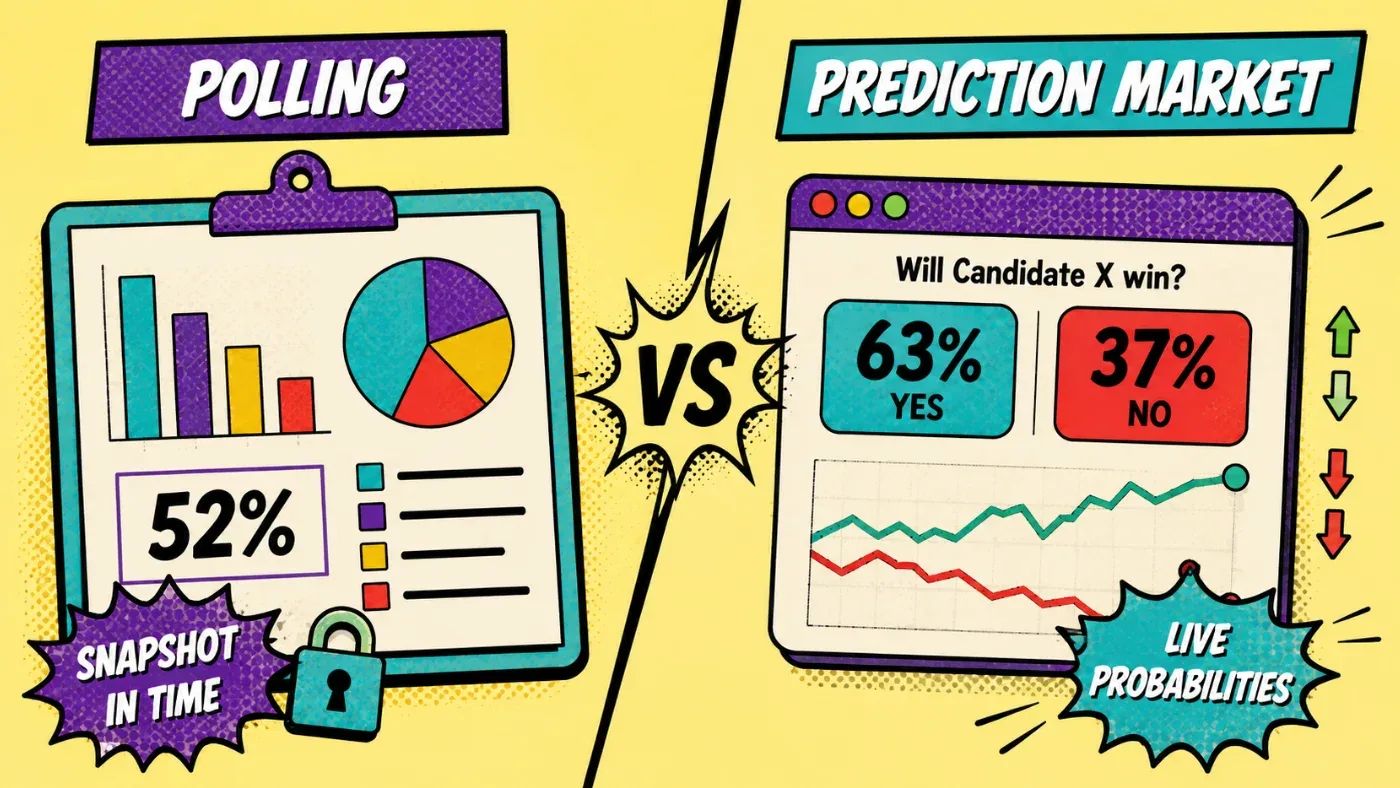
Public opinion polls attempt to estimate how groups of people currently feel about an issue or candidate. Polling organizations typically:
- sample respondents
- ask structured questions
- weight demographic data
- estimate broader public sentiment
Polls provide snapshots of opinion at a specific moment in time. This makes them extremely useful for:
- measuring voter sentiment
- tracking popularity changes
- understanding demographic trends
- analyzing public reactions
But polls also face challenges:
- sampling errors
- response bias
- turnout uncertainty
- rapidly changing news cycles
And in fast-moving environments, polling data can become outdated surprisingly quickly.
How Prediction Markets Work Differently
Prediction markets approach forecasting from a completely different angle. Instead of asking people:
prediction markets effectively ask:
Participants react to:
- news
- sentiment
- economic events
- debates
- social media narratives
- probability movement itself
As information changes, market probabilities move continuously in real time. This creates a forecasting environment that often behaves more dynamically than traditional polling systems. Explore for a deeper explanation of probability-based forecasting systems.
Why Polls and Prediction Markets Sometimes Disagree
One of the most interesting parts of modern forecasting is how often polls and prediction markets diverge. This can happen for several reasons:
- emotional market reactions
- turnout uncertainty
- demographic weighting differences
- online narrative momentum
- late-breaking information
- crowd psychology
During election cycles, for example, prediction markets sometimes react aggressively to:
- debates
- scandals
- viral clips
- media narratives
even while polling averages barely move. At other times, polls may shift before markets fully react. Neither system operates perfectly. And neither system is completely immune to emotional behavior or flawed assumptions.
Social Media Changes Everything
Modern forecasting environments are now deeply connected to:
- X
- YouTube
- livestreams
- viral online narratives
This has changed both:
- polling behavior
- prediction market behavior
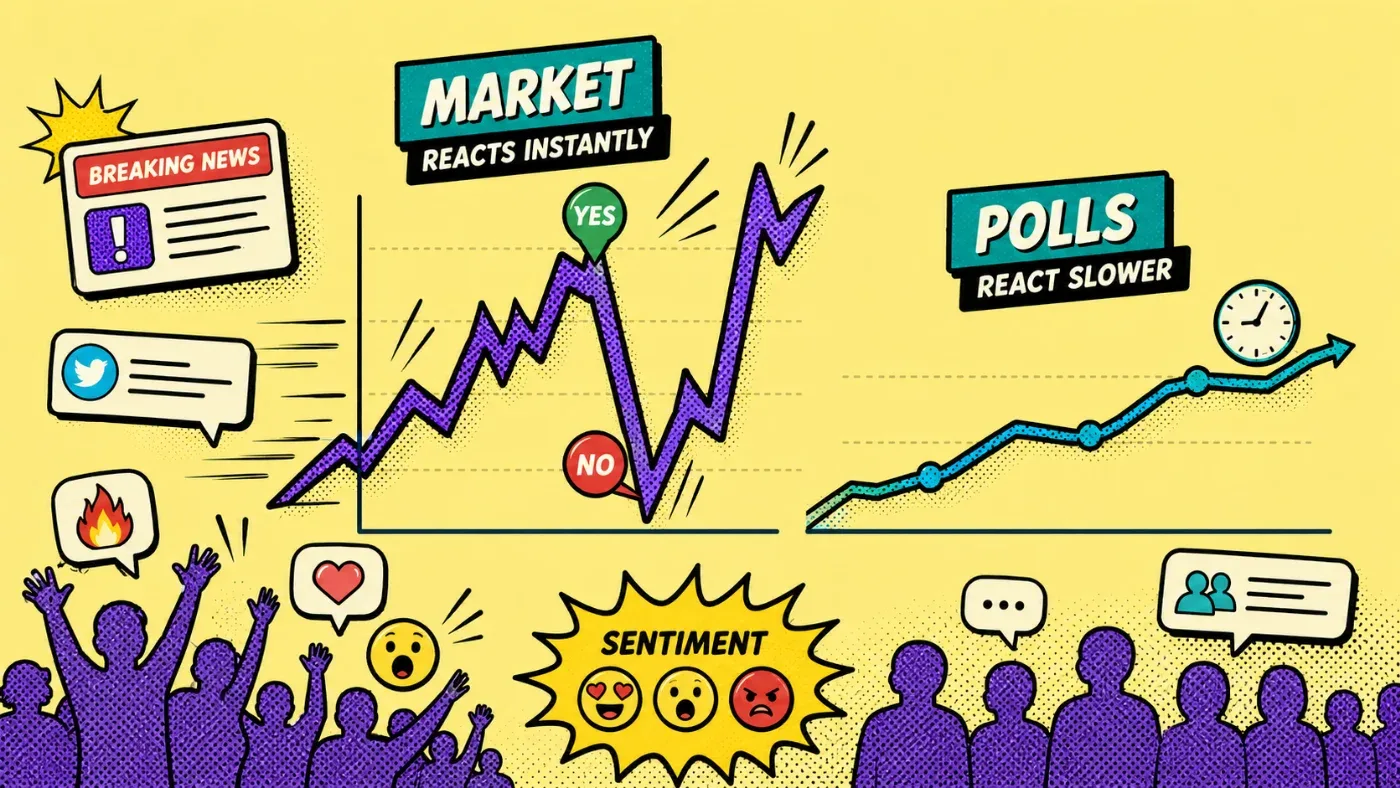
Prediction markets often react extremely quickly to viral online sentiment. Polls move more slowly because collecting and processing data takes time. Some analysts believe social media acceleration has widened the gap between:
- real-time crowd sentiment
- and slower traditional polling systems.
Why Prediction Markets Sometimes React Faster
Prediction markets move continuously. That gives them one major advantage:
- speed.
Probabilities can shift within minutes after:
- debates
- economic reports
- AI announcements
- geopolitical escalations
- unexpected news
This rapid reaction is one reason many observers follow prediction markets during major live events. Some users even treat probabilities as a form of:
- live sentiment tracking
- crowd psychology monitoring
- narrative momentum analysis
But fast reactions are not always accurate reactions. Prediction markets can also become emotional very quickly. Especially during highly polarized events.
Emotional Overreaction Cycles
Online prediction market communities frequently discuss moments where:
- probabilities spike aggressively
- panic sentiment spreads
- crowd conviction suddenly collapses
Later, probabilities sometimes partially reverse once emotions cool down. This behavior becomes especially visible during:
- elections
- crypto volatility
- geopolitical crises
- AI hype cycles
Explore to understand how crowd behavior influences probability movement.
Why Polls Still Matter
Despite the rise of prediction markets, polls remain extremely important. Polling data helps analysts understand:
- demographic behavior
- voter sentiment
- issue popularity
- long-term opinion trends
Prediction markets and polls are often strongest when viewed together rather than separately. Markets may react faster. Polls may provide deeper structural context. Some analysts compare the relationship this way:
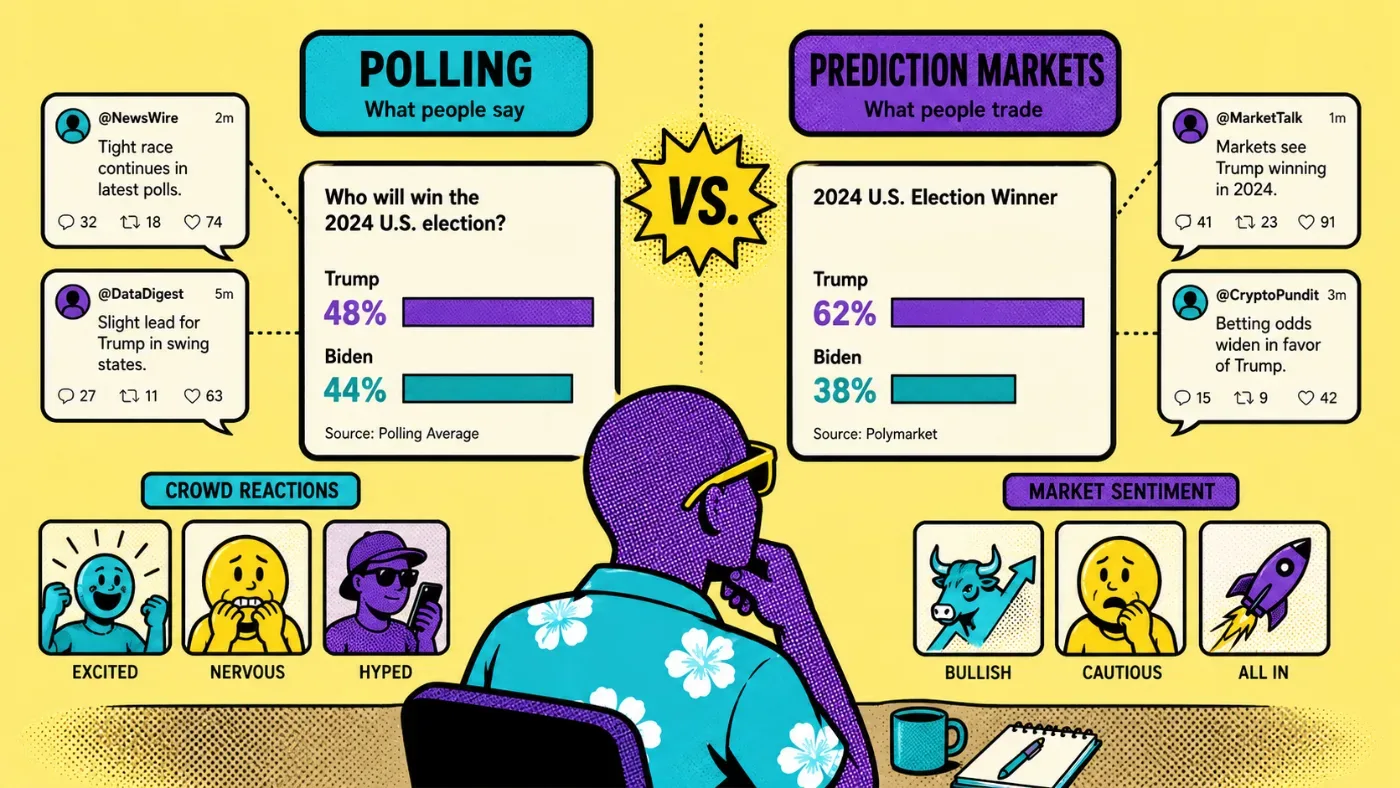
- polls measure stated opinion
- prediction markets measure perceived probability
Those are related ideas. But they are not the same thing.
Historical Examples of Divergence
Several major global events increased interest in prediction markets after polls and forecasting systems produced conflicting signals. Examples frequently discussed online include:
- Brexit
- US presidential elections
- crypto market expectations
- geopolitical forecasting
During some election cycles, prediction markets and polling averages diverged sharply before eventually converging closer to final outcomes. These moments helped fuel debates about:
- crowd intelligence
- forecasting accuracy
- market psychology
- information aggregation
Researchers continue studying why different forecasting systems sometimes disagree so dramatically.
Why Neither System Is Perfect
Prediction markets and polls both have weaknesses. Polls can struggle with:
- turnout assumptions
- sampling bias
- changing demographics
- declining response rates
Prediction markets can struggle with:
- ow liquidity
- emotional crowd behavior
- narrative bubbles
- volatility
- manipulation concerns
This is why many researchers and analysts avoid treating either system as absolute truth. Both forecasting systems reflect uncertainty in different ways. And uncertainty itself is difficult to measure perfectly.
Why Prediction Markets Fascinate the Internet
One reason prediction markets continue growing online is because probabilities create a uniquely visual form of collective sentiment. Watching probabilities move in real time during:
- elections
- AI announcements
- crypto volatility
- sports finals
- geopolitical conflicts
has become part of modern internet culture. Some people follow prediction markets without ever placing a trade simply because the movement itself feels like watching public psychology unfold live online.
FAQ About Prediction Markets vs Polls
What is the difference between prediction markets and polls?
Polls measure what people currently say they believe, while prediction markets measure crowd expectations about future outcomes.
Why do prediction markets and polls sometimes disagree?
They react differently to: 👉news 👉social media 👉uncertainty 👉crowd psychology 👉turnout expectations
Are prediction markets more accurate than polls?
Sometimes prediction markets react faster to changing information, but neither system is consistently perfect.
Why do prediction markets move so quickly?
Prediction markets continuously react to: 🔹breaking news 🔹sentiment shifts 🔹online narratives 🔹probability changes in real time.
Why do some analysts still prefer polls?
Polls provide detailed demographic and voter sentiment data that prediction markets cannot fully capture.
Final Thoughts
Prediction markets and polls are not really competing systems. They are different ways of interpreting uncertainty. Polls attempt to measure public opinion directly. Prediction markets attempt to measure collective expectations through probability movement and crowd behavior. Both systems become especially fascinating during moments of:
- political uncertainty
- economic instability
- social media acceleration
- major global events
As forecasting culture continues evolving online, the relationship between polls, prediction markets, crowd psychology, and real-time information flow will likely become even more important in how people interpret the future.


