
Guide
How Prediction Markets Work
Discover how prediction markets function, how crowd forecasting works, and why probability-based markets have become a real-time forecasting system across politics, crypto, AI, sports, and global events.

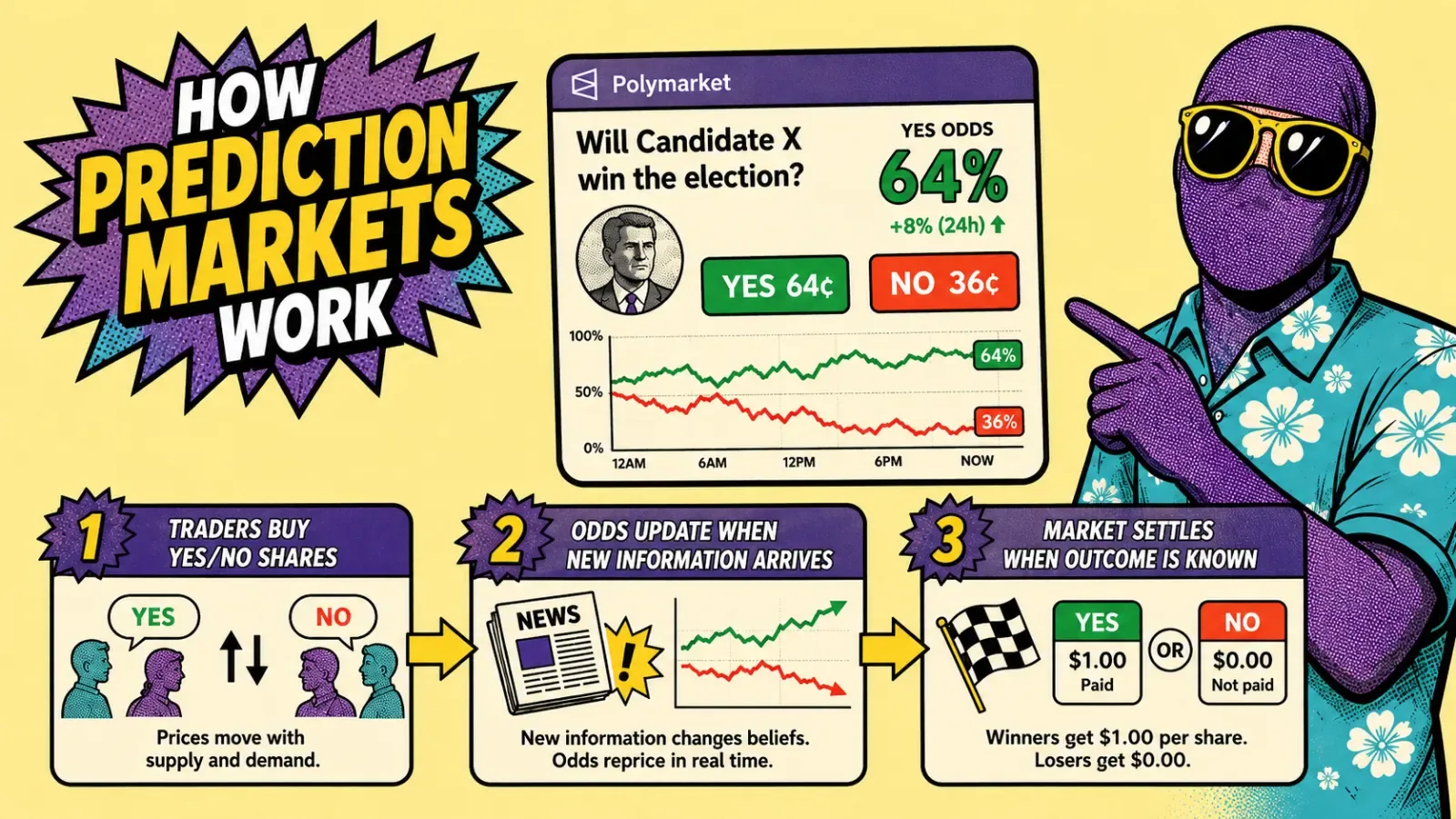
Prediction markets are one of the most fascinating forecasting systems ever created. Instead of relying only on polls, expert opinions, or media narratives, prediction markets allow thousands of participants to collectively price the probability of future events in real time. These systems are used to forecast:
- elections
- financial events
- sports outcomes
- technological developments
- geopolitical risks
The core idea behind prediction markets is surprisingly simple: markets can sometimes aggregate information faster and more efficiently than traditional forecasting systems. People searching:
- “how prediction markets work”
- “what are prediction markets”
- “how probability trading works”
usually want a clear explanation without complicated financial jargon. This guide explains how prediction markets actually work, why probabilities move, and why crowd forecasting has become increasingly important in modern information systems.
The Core Idea Behind Prediction Markets
Prediction markets are systems where probabilities become tradable prices. Participants buy and sell positions based on how likely they believe future events are to happen. For example:
- a 70¢ YES price usually implies roughly a 70% probability
- a 30¢ YES price implies roughly a 30% probability
When the event resolves:
- winning shares pay $1
- losing shares become worthless
Unlike traditional forecasting systems that update periodically, prediction markets constantly evolve as participants react to new information. In simple terms, prediction markets transform crowd expectations into live probabilities.
Key Facts About Prediction Markets
| Feature | Description |
|---|---|
| Trading System | YES / NO Probability Shares |
| Market Driver | Crowd sentiment and information flow |
| Main Use | Forecasting future events |
| Common Categories | Politics, Crypto, Sports, AI, Finance |
| Probability Range | Usually 1% to 99% |
| Market Movement | Real-time probability changes |
| Core Mechanism | Continuous price discovery |
Why Prediction Markets Exist
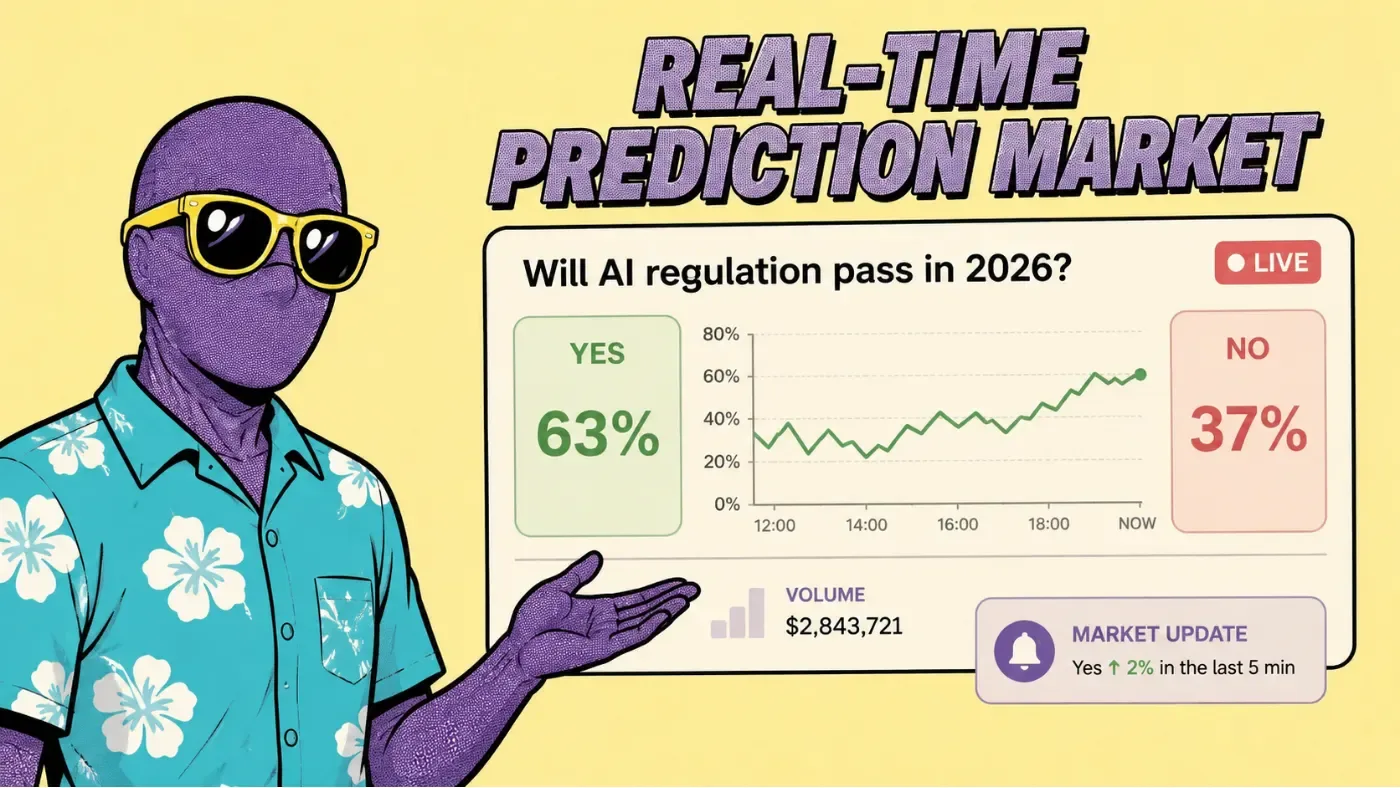
Traditional forecasting systems often struggle during fast-moving events. Polls become outdated quickly. Analysts may be biased. Media narratives often lag behind reality. Prediction markets attempt to solve this problem by allowing participants to continuously update probabilities through market activity. When new information appears, traders immediately react by:
- buying positions
- selling positions
- adjusting probabilities
This creates a constantly evolving forecasting system that reflects collective expectations in real time. During major global events, prediction markets can sometimes react within minutes while traditional forecasting systems may take hours or days to adjust.
How Probabilities Become Market Prices
Prediction markets transform probabilities into prices through a process called price discovery. If participants collectively believe an event has a high chance of happening:
- YES prices rise
- implied probabilities increase
If confidence declines:
- YES prices fall
- probabilities move lower
Instead of a central authority setting probabilities, markets continuously adjust through:
- crowd participation
- incoming information
- sentiment changes
- market psychology
This dynamic adjustment process is one of the defining characteristics of prediction markets.
Example of Probability Trading
Imagine a market asking:
| Position | Entry Price | Value if Event Happens |
|---|---|---|
| YES | $0.40 | $1 |
| NO | $0.60 | $0 |
If major ETF news increases optimism, the YES side may rise from $0.40 to $0.70. Participants who entered earlier can often sell before final resolution and lock in profit. This is one reason many users describe prediction markets as event-driven probability trading systems rather than traditional betting platforms.
Why Prediction Markets React So Quickly
Prediction markets move quickly because financial incentives encourage participants to react immediately to new information. For example:
- election debates
- inflation reports
- AI announcements
- sports injuries
- geopolitical escalations
can rapidly reshape probabilities. In many cases, prediction markets react faster than traditional media commentary because traders are financially motivated to process information quickly. This speed becomes especially visible during:
- elections
- crypto volatility
- sports tournaments
- central bank announcements
- major technology launches
Some traders monitor prediction markets specifically because they believe probabilities often reflect crowd expectations before mainstream narratives fully develop.
The Role of Crowd Intelligence
One of the core ideas behind prediction markets is crowd intelligence. Instead of relying on a single analyst or forecasting institution, prediction markets aggregate thousands of individual reactions and information sources into one continuously evolving probability system. This concept is closely connected to the idea known as:
While crowds are not always correct, large groups reacting independently to information can sometimes produce surprisingly effective forecasts. Prediction markets essentially transform:
- opinions
- incentives
- information
- sentiment
into market probabilities. This is why many analysts view prediction markets as a unique form of collective forecasting.
Prediction Markets vs Polls and Traditional Betting
| Traditional Polls | Traditional Polls |
|---|---|
| Snapshot opinions | Continuous probability updates |
| Updated periodically | Updates in real time |
| No financial incentives | Market participants risk money |
| Measures stated opinions | Measures conviction and sentiment |
| Traditional Betting | Prediction Markets |
|---|---|
| Fixed odds | Dynamic probabilities |
| Bookmaker-controlled pricing | Market-driven pricing |
| Mostly entertainment-focused | Forecasting-focused |
| Limited flexibility | Positions can often be sold anytime |
Prediction markets combine elements of:
- forecasting
- trading
- information aggregation
- crowd psychology
into one continuously adapting system.
Where Prediction Markets Are Used
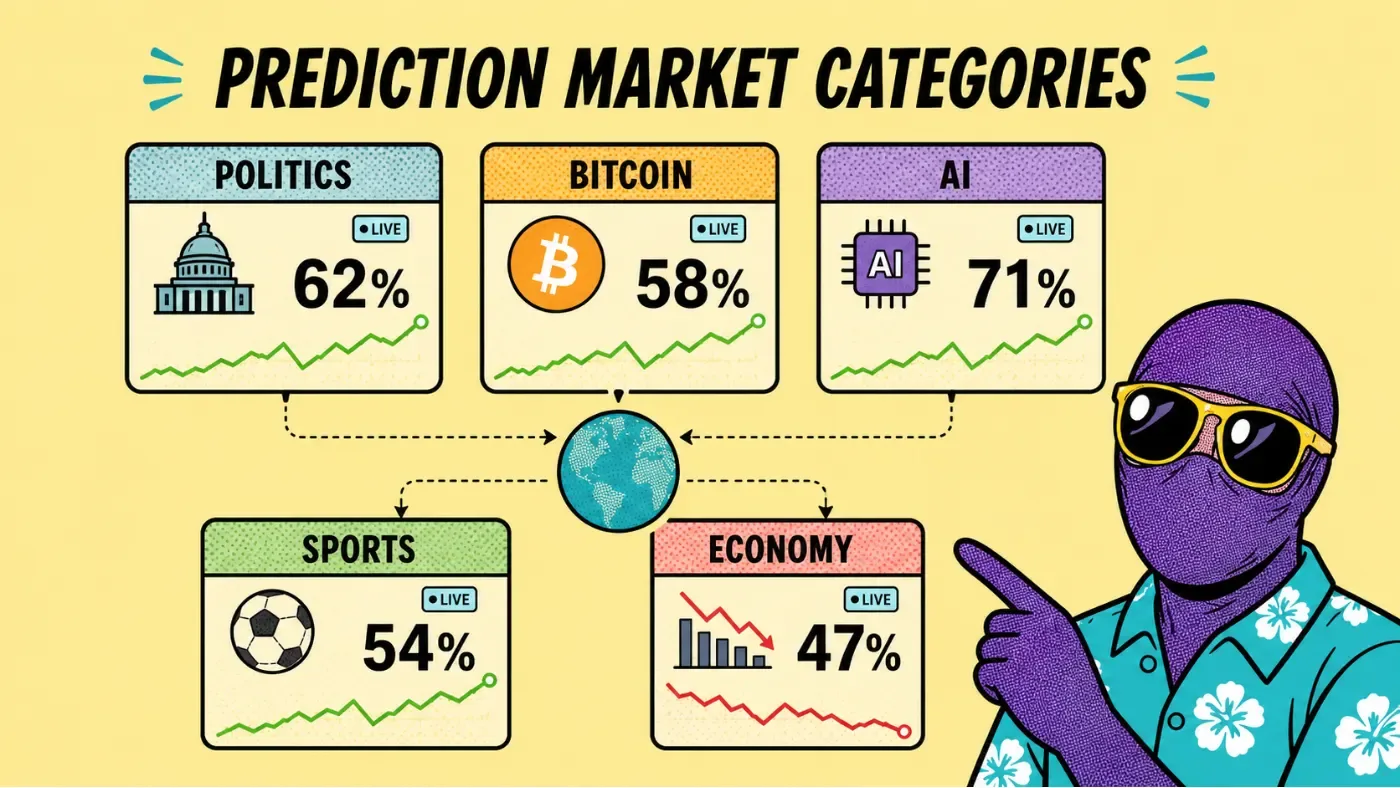
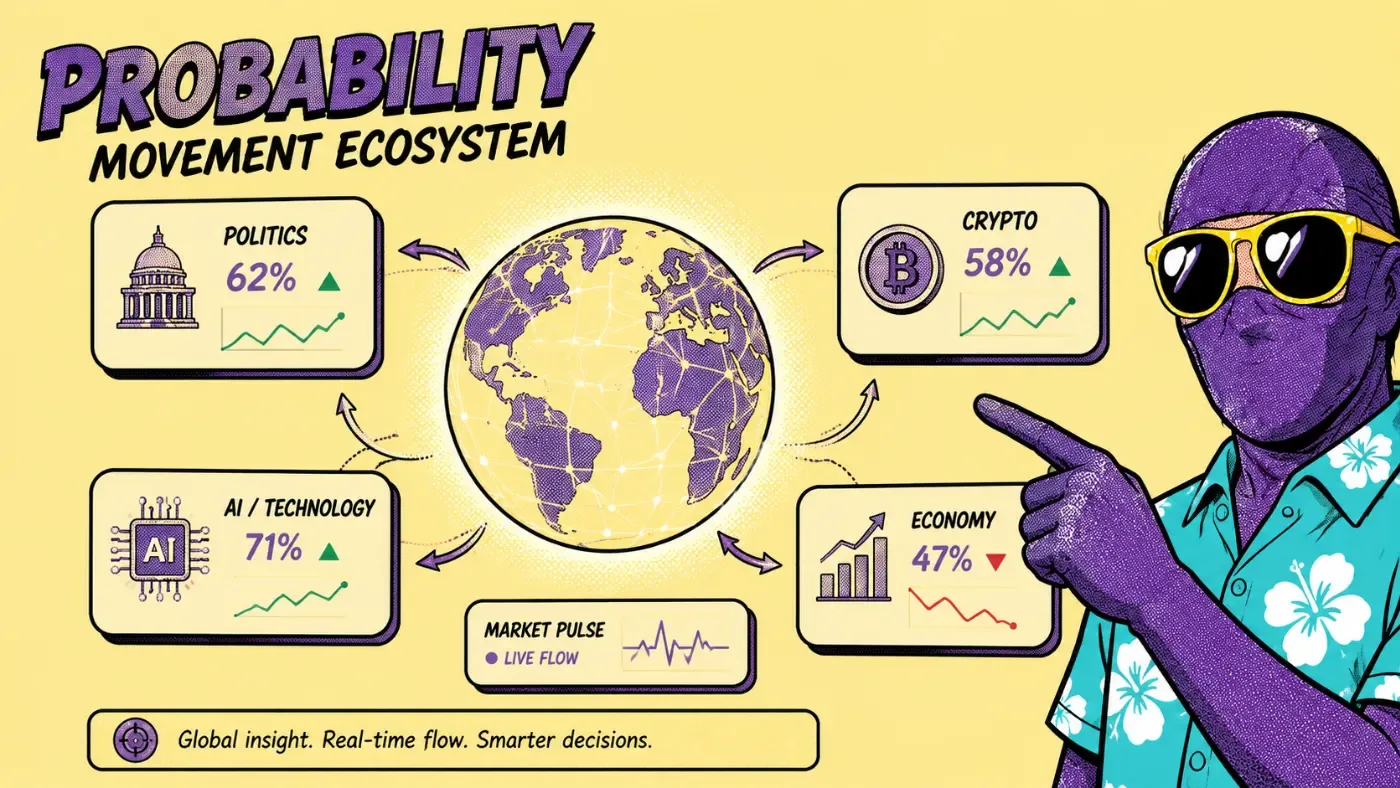
Prediction markets now cover almost every major forecasting category online.
Political Forecasting
Political prediction markets commonly track:
- elections
- policy decisions
- geopolitical developments
- leadership changes
Explore to follow election and geopolitical forecasting trends.
Crypto and Financial Markets
Crypto forecasting markets focus heavily on:
- Bitcoin price targets
- ETF approvals
- blockchain adoption
- regulation
Financial markets also track:
- inflation
- interest rates
- recession probabilities
Explore and for live market forecasting.
Technology and AI Forecasting
Technology prediction markets increasingly focus on:
- AI developments
- product launches
- semiconductor trends
- innovation cycles
Explore for AI and technology forecasting.
Sports and Entertainment Forecasting
Prediction markets also cover:
- sports championships
- esports tournaments
- entertainment trends
- viral culture
These categories often become highly volatile during major live events. Explore and for live event forecasting.
Common Mistakes Beginners Make
Trading emotionally instead of probabilistically
Many beginners focus on what they personally want to happen instead of analyzing whether probabilities are accurate. Prediction markets reward probability thinking more than emotional conviction.
Chasing volatility too late
By the time major news dominates social media, probabilities may already reflect the information. This catches many new participants off guard.
Ignoring market psychology
Prediction markets are heavily influenced by:
- fear
- hype
- momentum
- crowd behavior
Understanding psychology often matters just as much as understanding the event itself.
Current Trends in Prediction Markets
Prediction markets are currently growing fastest around:
- politics
- AI and technology
- crypto adoption
- macroeconomic uncertainty
- geopolitical forecasting
AI-driven news cycles and social media acceleration are also increasing how quickly probabilities move across nearly every category. Many analysts now view prediction markets as one of the fastest public sentiment systems online.
FAQ About How Prediction Markets Work
How do prediction markets work in simple terms?
Prediction markets allow participants to trade on the probability of future events using market-based pricing systems.
Are prediction markets accurate?
Prediction markets can react very quickly to changing information, though they are not guaranteed to predict future outcomes perfectly.
Why are prediction markets becoming popular?
Prediction markets combine: -crowd intelligence -real-time information -forecasting -probability analysis into one continuously updating system.
What categories exist in prediction markets?
Popular categories include: -politics -crypto -finance -sports -AI -economy -global events -entertainment
Final Thoughts
Prediction markets combine:
- crowd intelligence
- probability discovery
- market psychology
- real-time information flow
into a continuously evolving forecasting system. Unlike traditional forecasting models that update slowly, prediction markets constantly adjust as participants react to new information. As politics, finance, technology, sports, and global events become increasingly interconnected, prediction markets are evolving into one of the most important real-time forecasting mechanisms on the internet.


