
Guide
What Is Polymarket?
Learn how Polymarket works, how prediction markets function, how traders make money, and why political and crypto event trading has exploded in popularity.

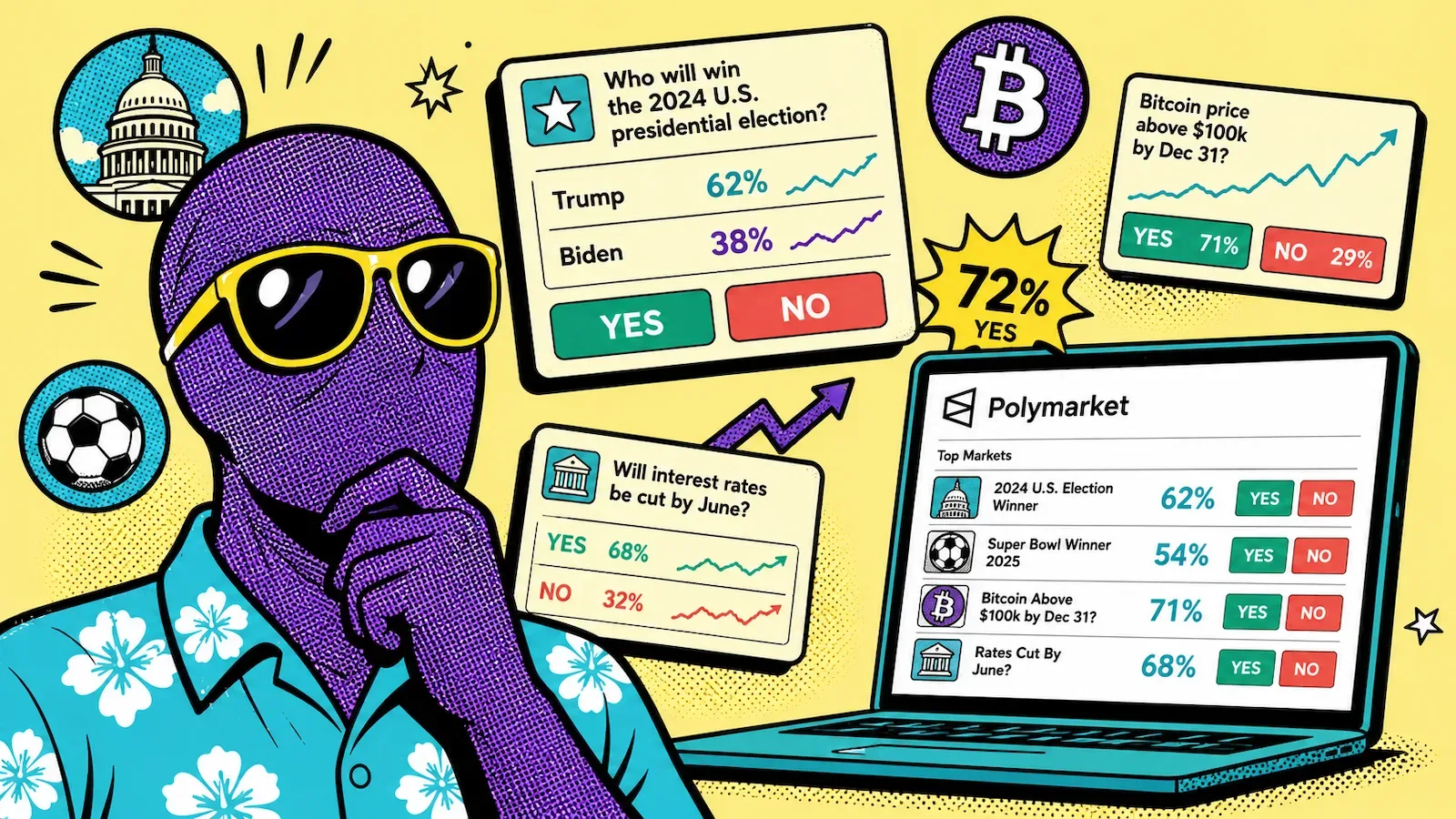
Prediction markets have quietly become one of the most interesting corners of the internet. Instead of arguing about politics, crypto, or world events on social media, people are now putting real money behind their opinions. That is where Polymarket comes in. Polymarket allows users to trade on the probability of real-world outcomes using YES and NO shares. Markets can cover everything from elections and Bitcoin prices to AI product launches and global economic events. At first glance, it looks similar to betting. After spending time around prediction markets though, the experience feels much closer to trading information. People searching for terms like:
- “what is Polymarket”
- “how does Polymarket work”
- “can you make money on prediction markets”
usually want a clear explanation without technical jargon. This guide breaks everything down step by step.
Definition of Polymarket
Polymarket is a prediction market platform where users trade on whether real-world events will happen. Instead of fixed betting odds, markets use dynamic probabilities represented by YES and NO share prices. For example:
- YES trading at $0.72 suggests a 72% implied probability
- NO trading at $0.28 suggests a 28% implied probability
When the event resolves:
- winning shares pay $1
- losing shares become worthless
In simple terms, Polymarket turns probabilities into tradable assets.
Key Facts About Polymarket
| Feature | Description |
|---|---|
| Platform Type | Prediction Market |
| Trading System | YES / NO Shares |
| Main Categories | Politics, Crypto, Finance, Sports |
| Price Range | $0.01 to $0.99 |
| Winning Payout | $1 per correct share |
| Market Movement | Driven by news and sentiment |
| Trading Style | Probability-based trading |
How Does Polymarket Work?
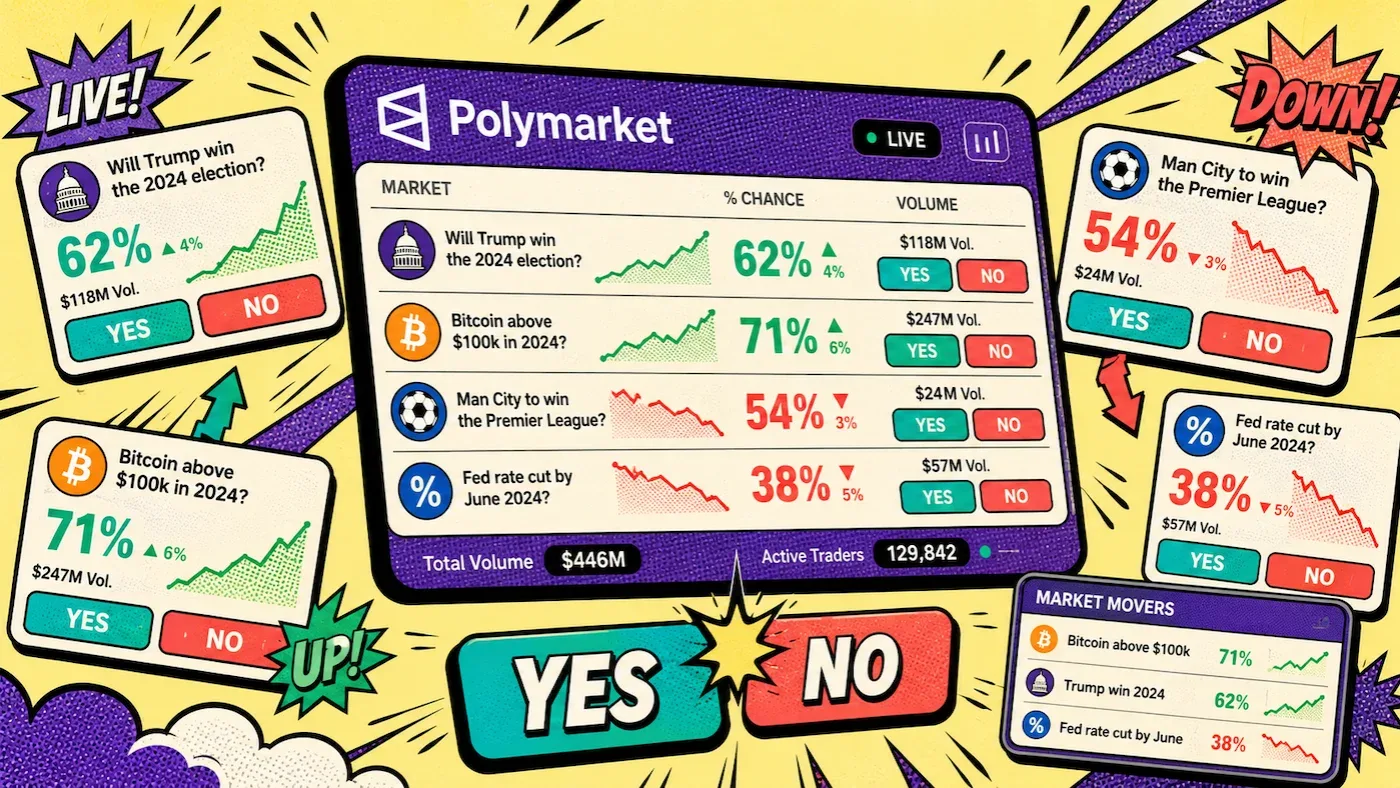
Prediction markets work differently from traditional betting platforms. Instead of betting against a bookmaker, users trade against other participants who may disagree about the probability of an event. Prices constantly move as new information enters the market. That movement is what makes prediction markets so interesting.
YES and NO Shares Explained
Every market has two possible positions:
- YES
- NO
If you believe an event is more likely to happen than the market suggests, you may buy YES shares. If you think the market is overestimating the probability, you may buy NO shares instead. One important difference from traditional betting is that traders can usually exit positions before the event resolves. That creates a much more active environment.
Simple Trading Example
Imagine a market asking:
| Position | Entry Price | Value if Event Happens |
|---|---|---|
| YES | $0.40 | $1 |
| NO | $0.60 | $0 |
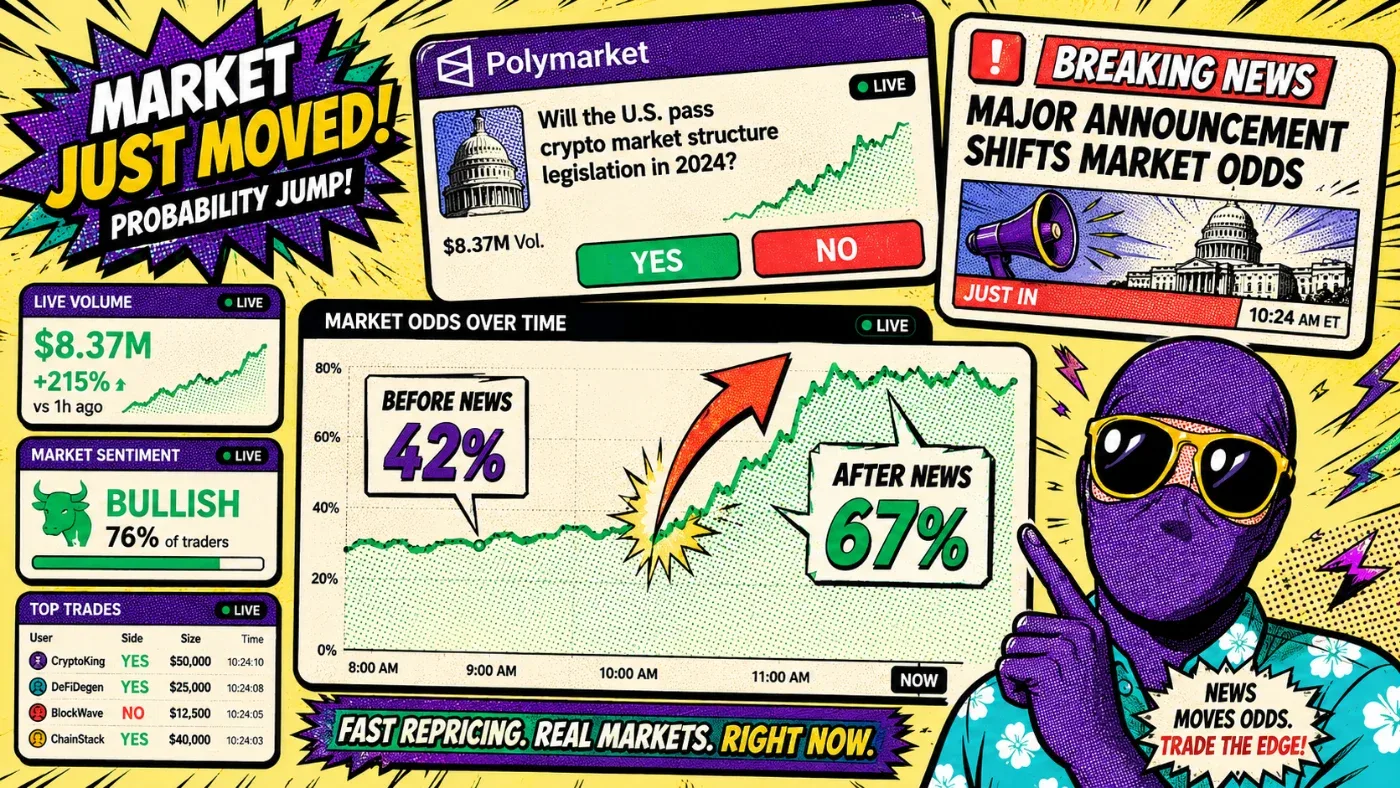
If YES later rises from $0.40 to $0.68 after major crypto news, traders can sell early and lock in profit without waiting for final resolution. This happens surprisingly often during volatile news cycles. During major political debates or unexpected economic announcements, probabilities can move aggressively within minutes. Some experienced users even monitor prediction markets before checking traditional news coverage because market sentiment reacts so quickly.
Why Prediction Markets Have Become So Popular
Prediction markets sit at the intersection of:
- finance
- news
- social sentiment
- trading psychology
That combination makes them very different from most online platforms. During the 2024 US election cycle, several political markets experienced probability swings of more than 20% within hours after televised debates and breaking headlines. Crypto-related markets move even faster. In some cases, Bitcoin prediction markets react to news before broader crypto sentiment fully catches up. That speed is part of what attracts traders.
Popular Types of Polymarket Markets
Prediction markets now cover almost every major category online.
Political Prediction Markets
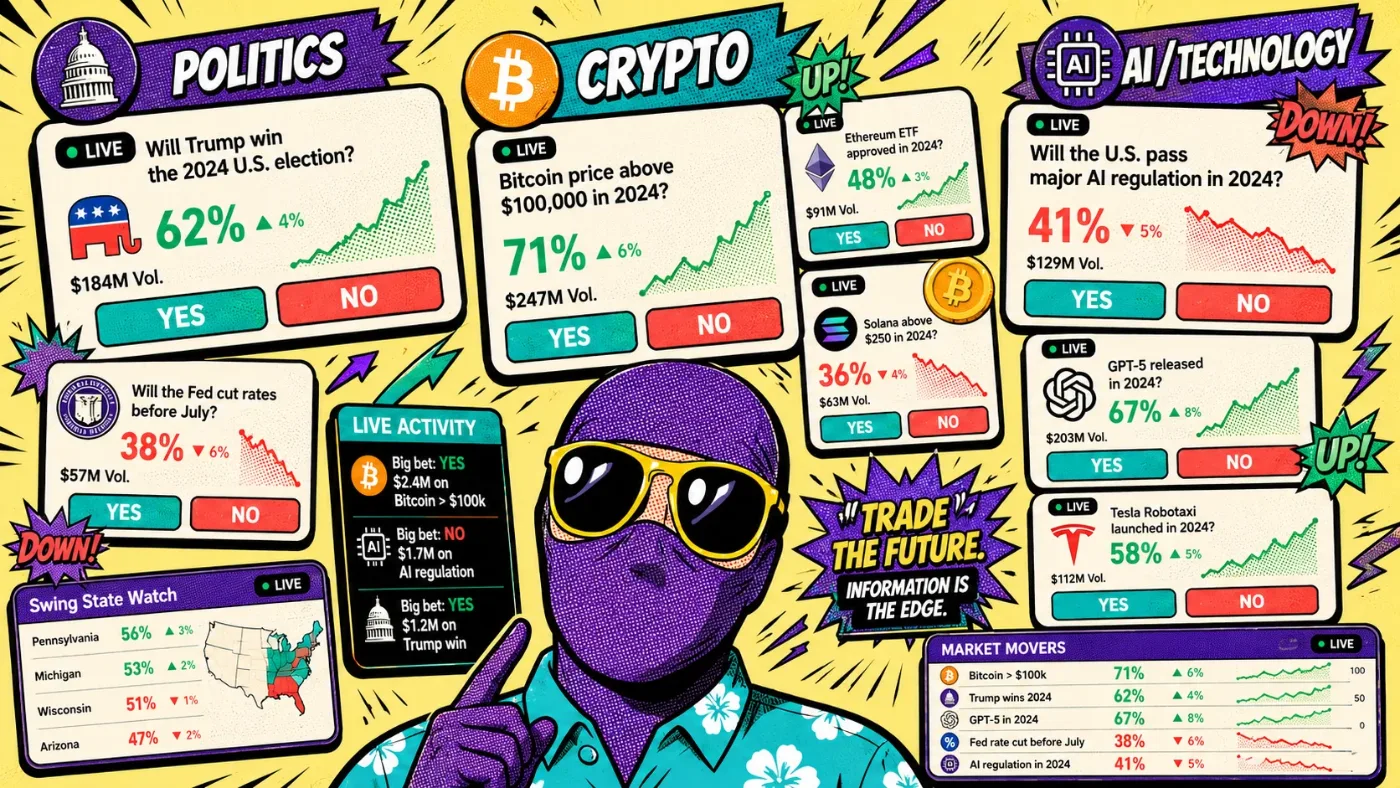
Political markets are usually the most active. Common examples include:
- election outcomes
- policy decisions
- approval ratings
- geopolitical developments
Political markets tend to become extremely volatile during:
- debates
- interviews
- breaking news
- legal developments
This is one reason searches for “political prediction markets” and “election prediction markets” continue growing.
Crypto Prediction Markets
Crypto traders frequently use prediction markets to speculate on:
- Bitcoin price targets
- ETF approvals
- regulation changes
- exchange news
Unlike slower traditional markets, crypto-related probabilities can move dramatically overnight. Many beginners underestimate how emotional crypto prediction markets can become during hype cycles.
Technology and AI Markets
- AI and technology prediction markets have expanded rapidly over the last two years.
- Popular themes include:
- AI product launches
- company announcements
- adoption forecasts
- hardware releases
Markets connected to artificial intelligence often generate unusually high engagement because information changes so quickly.
Is Polymarket Gambling or Trading?
This question appears constantly online. The reality is more nuanced than most people expect.
| Traditional Betting | Prediction Markets |
|---|---|
| Fixed odds | Dynamic probabilities |
| Limited exit options | Positions can be sold anytime |
| Bookmaker controls pricing | Market participants move prices |
| Mostly entertainment | Mostly entertainment |
Most experienced users approach prediction markets more like short-term event trading than traditional gambling. Timing, liquidity, and probability analysis matter far more than emotional opinions. One thing new traders often discover quickly is that being “right eventually” does not always mean making money. If the market already priced in the information, the opportunity may already be gone.
Can You Make Money on Polymarket?
Yes, but prediction markets are much more competitive than social media makes them appear. Screenshots showing massive profits often ignore:
- losing trades
- poor liquidity
- emotional mistakes
- late entries
Profitable traders usually focus on:
- probability mispricing
- fast reactions to information
- disciplined risk management
- avoiding emotional momentum trades
Common Beginner Mistakes
Buying after hype spikes One of the most common mistakes is entering after viral news already moved the market. At that point, probabilities may already reflect the new information. Ignoring liquidity Low-volume markets can look attractive but may become difficult to exit efficiently. This catches many beginners off guard. Trading emotionally Prediction markets punish emotional decision-making very quickly. Markets often move independently from what people personally want to happen. That psychological difference is harder than many beginners expect.
Is Polymarket Legal?
The legal status of prediction markets depends heavily on jurisdiction. Users should always check local regulations before participating. Prediction markets continue evolving because they overlap with:
- forecasting systems
- financial speculation
- decentralized technology
- event trading
Regulation in this space is still developing rapidly.
How Beginners Should Approach Prediction Markets
Most beginners overcomplicate prediction markets immediately. Simple approaches usually work better early on.
Focus on liquid markets
High-volume markets generally have:
- tighter spreads
- easier exits
- more reliable pricing
Think in probabilities, not opinions
The key question is not:
The real question is:
That mindset shift changes everything.
Use smaller positions early
Volatility can increase dramatically after breaking news events. Smaller positions help beginners survive long enough to actually learn how markets behave.
Common Misconceptions About Prediction Markets
| Misconception | Reality |
|---|---|
| Prediction markets are just gambling | Markets behave similarly to trading systems |
| Bigger bets increase profits | Risk management matters more |
| You must hold until resolution | Positions can often be sold anytime |
| Being correct guarantees profit | Timing matters heavily |
Current Trends in Prediction Markets
Prediction markets are growing fastest in:
- politics
- crypto
- AI-related events
Political volatility and rapid crypto news cycles continue attracting new users. At the same time, AI-focused markets have started becoming increasingly popular as technology announcements generate massive public attention. Many analysts now view prediction markets as alternative real-time sentiment indicators rather than simple betting systems.
FAQ About Polymarket
What is Polymarket in simple terms?
Polymarket is a platform where users trade on whether real-world events will happen.
How do YES and NO shares work?
YES shares profit if an event happens. NO shares profit if the event does not happen.
Can traders exit before events resolve?
Yes. Most positions can be sold before final market resolution.
Are prediction markets accurate?
Prediction markets are often effective at aggregating crowd expectations, but they are not perfect predictors of future outcomes.
Final Thoughts
Prediction markets are becoming one of the most interesting ways to track collective expectations online. Polymarket combines:
- information
- sentiment
- probability
- trading psychology
into a single live system where probabilities constantly evolve. For some users, it is entertainment. For others, it functions more like a real-time information market driven by crowd intelligence. Understanding how probabilities move is usually far more important than simply guessing outcomes.


