
sports
48 linked markets
24h Vol
$49.1M
World Cup Winner
Will Ivory Coast win the 2026 FIFA World Cup?0%Will Egypt win the 2026 FIFA World Cup?0%Will Congo DR win the 2026 FIFA World Cup?0%
Liquidity
$338.7M
Markets
48
7/20/2026
PolymarketPrediction Markets
Explore live prediction markets covering politics, crypto, AI, sports, finance, economy, and global events with real-time forecasting and probability tracking.
Guides
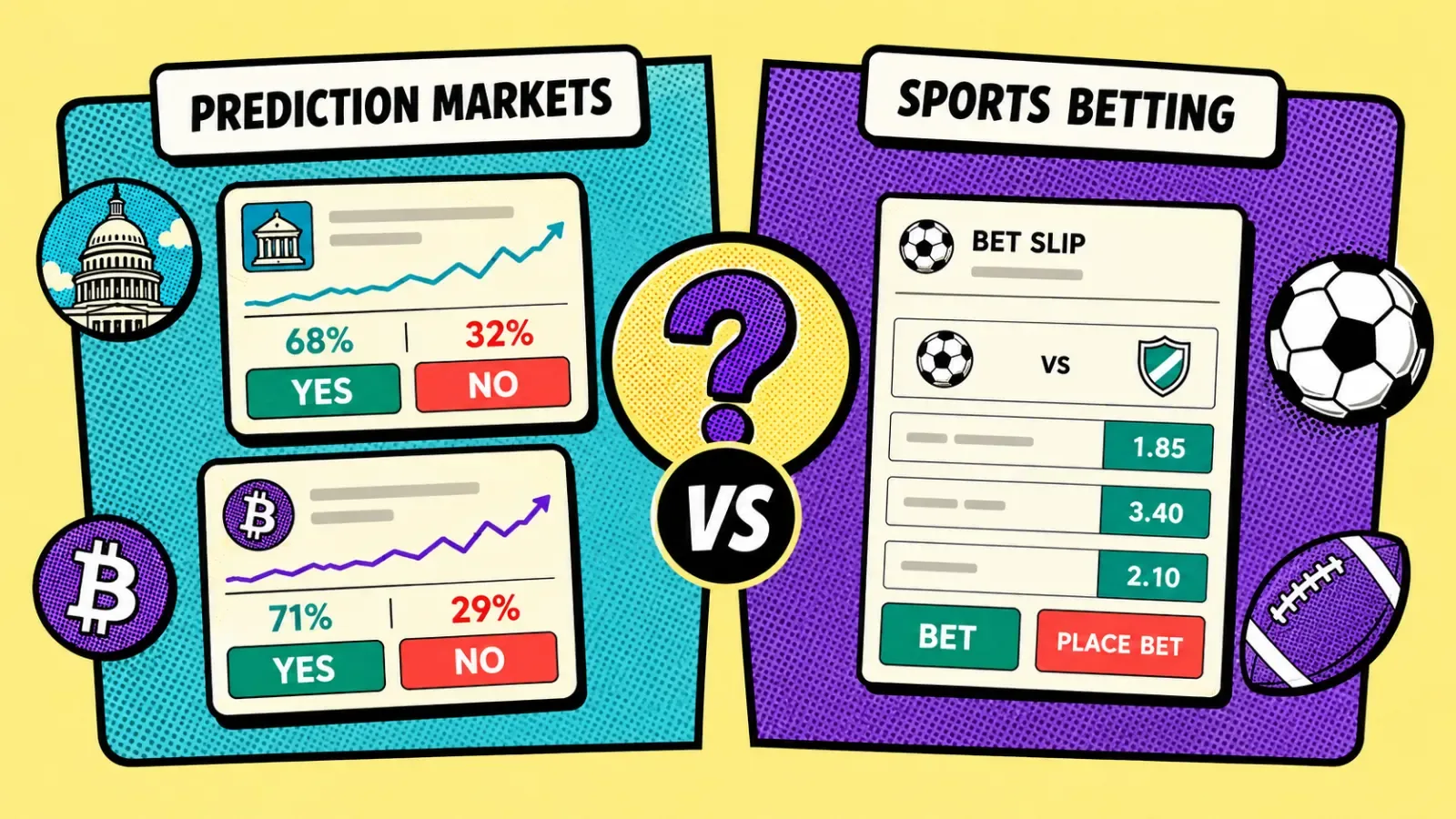
Prediction markets and sports betting may look similar at first glance, but they operate differently. Explore how forecasting markets compare to traditional sports wagering and why the distinction remains debated.

Explore Polymarket geographic restrictions, regional availability, and how regulation affects access to prediction market platforms across different countries.
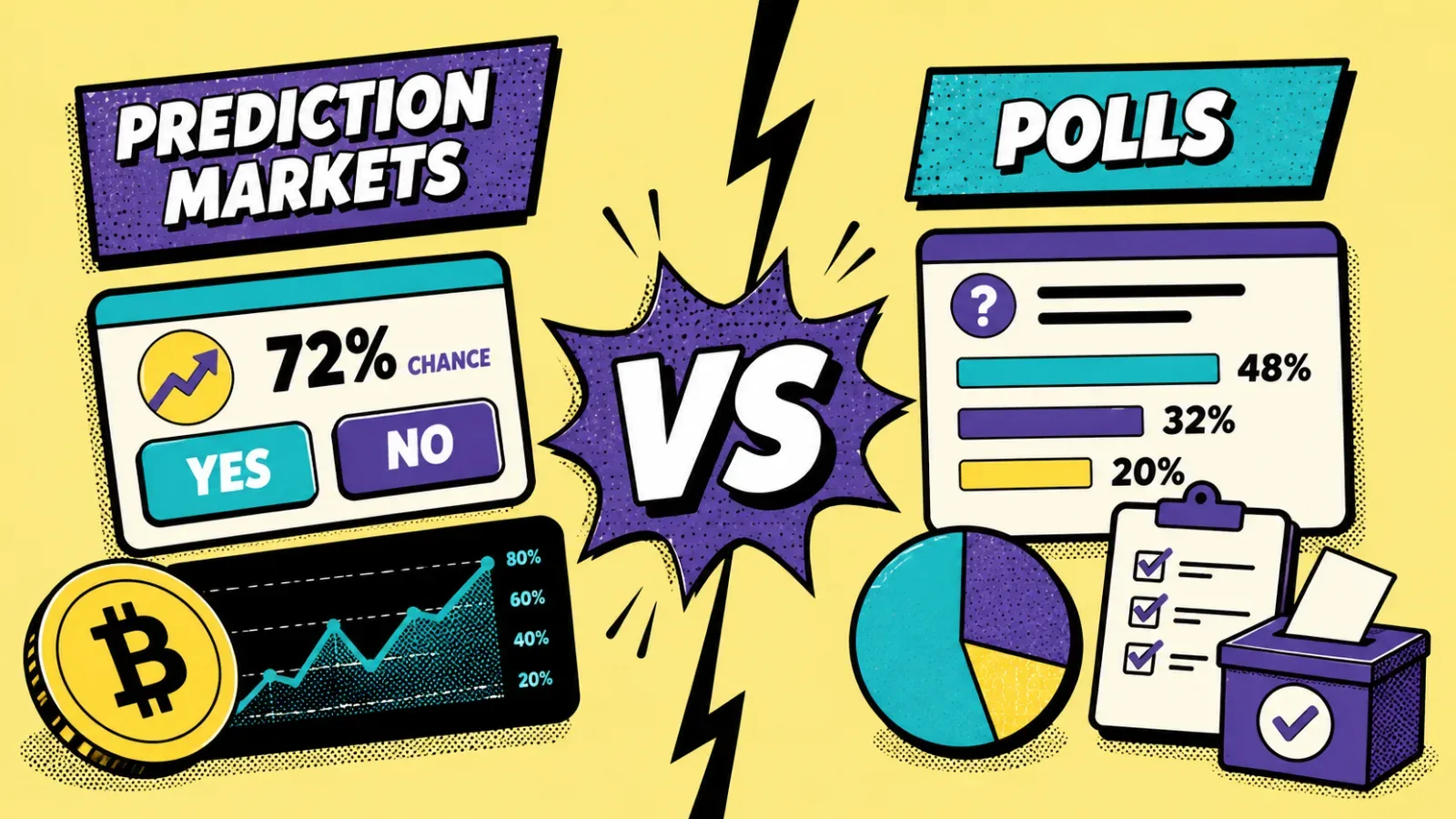
Learn how prediction markets and public opinion polls differ, why they sometimes disagree, and how crowd psychology, social media, and forecasting systems shape public expectations.
Markets
48 linked markets
24h Vol
$49.1M
Liquidity
$338.7M
Markets
48
7/20/2026
Polymarket
18 linked markets
24h Vol
$4M
Liquidity
$443.3K
Markets
18
6/5/2026
Polymarket
5 linked markets
24h Vol
$3.9M
Liquidity
$6.4M
Markets
5
6/17/2026
Polymarket
6 linked markets
24h Vol
$3.8M
Liquidity
$2.3M
Markets
6
12/31/2026
Polymarket
45 linked markets
24h Vol
$2.7M
Liquidity
$59.8M
Markets
45
11/7/2028
Polymarket
1 linked markets
24h Vol
$2.4M
Liquidity
$496.5K
Markets
1
6/30/2026
Polymarket
41 linked markets
24h Vol
$2M
Liquidity
$721.8K
Markets
41
6/5/2026
Polymarket
18 linked markets
24h Vol
$1.8M
Liquidity
$1M
Markets
18
7/1/2026
Polymarket
22 linked markets
24h Vol
$1.7M
Liquidity
$4.3M
Markets
22
4/12/2026
Polymarket
32 linked markets
24h Vol
$1.3M
Liquidity
$29K
Markets
32
9/1/2026
Polymarket
17 linked markets
24h Vol
$1.2M
Liquidity
$8.5M
Markets
17
10/4/2026
PolymarketLive forecasting
Prediction markets combine crowd intelligence, real-time information, probability forecasting, and market sentiment into a live system for tracking future outcomes.
Prediction markets are real-time forecasting systems where users trade on the probability of future events.
Instead of fixed betting odds, prediction markets use dynamic probabilities that constantly change as new information becomes available.
As information spreads faster online, prediction markets have become one of the most interesting ways to track crowd expectations in real time.
Many users first discover forecasting platforms through high-volatility categories like politics prediction markets and crypto prediction markets, where probabilities can move rapidly after breaking developments.
Prediction markets use probability-based trading systems. Each market contains YES shares and NO shares.
Prices move depending on breaking news, market sentiment, economic reports, sports outcomes, technology announcements, and geopolitical developments.
If probabilities change, traders can buy or sell positions based on whether they believe markets are overestimating or underestimating an event.
Unlike traditional betting systems, prediction markets continuously evolve as information changes. That flexibility creates a much more dynamic forecasting environment.
One reason prediction markets continue growing is their ability to react almost instantly to information. Elections move after debates, Bitcoin markets react to ETF news, AI markets shift after product launches, and sports markets change after injuries.
Users follow prediction markets for forecasting, sentiment tracking, event trading, probability analysis, and market psychology. Some users actively trade market movement, while others use probabilities as an alternative way to monitor public expectations during major global events.
Prediction markets now cover nearly every major category online.
Political forecasting markets track elections, geopolitical developments, policy decisions, and leadership changes. Explore politics prediction markets to follow live election and geopolitical forecasting.
Crypto prediction markets commonly focus on Bitcoin price targets, ETF approvals, regulation, and blockchain adoption. Explore crypto prediction markets for live blockchain and digital asset forecasts.
Technology forecasting markets track AI developments, product launches, innovation trends, and hardware releases. Explore technology prediction markets for live AI and innovation forecasting.
Economic forecasting markets cover inflation, recession probabilities, interest rates, and financial stability. Explore finance prediction markets and economy prediction markets to follow global economic forecasting trends.
Sports forecasting markets track championships, tournaments, player performance, and competitive gaming. Explore sports prediction markets and esports prediction markets for live tournament forecasting.
Global forecasting markets cover geopolitical events, entertainment trends, celebrity culture, and viral internet topics. Explore world event prediction markets and culture prediction markets for real-time global trend forecasting.
Prediction markets combine crowd intelligence, probability analysis, real-time information, and market psychology into one continuously updating system.
Traditional forecasting often updates slowly. Prediction markets react immediately.
This becomes especially valuable during elections, crypto volatility, AI breakthroughs, financial instability, and global conflicts.
Many analysts now view prediction markets as one of the fastest public sentiment systems on the internet.
Prediction markets create a more adaptive environment where probabilities continuously evolve as new information appears.
| Traditional Betting | Prediction Markets |
|---|---|
| Fixed odds | Dynamic probabilities |
| Bookmaker-controlled | Market-driven pricing |
| Mostly entertainment | Information-focused forecasting |
| Limited flexibility | Positions can often be sold anytime |
Many beginners focus on what they personally want to happen instead of what probabilities actually suggest. Prediction markets reward probability thinking more than emotional conviction.
By the time a trend dominates social media, probabilities may already reflect the information. This catches many beginners off guard.
Prediction markets can become highly volatile during elections, financial crises, sports finals, AI announcements, and geopolitical escalations. Risk management becomes extremely important during fast-moving events.
Prediction markets are currently growing fastest around artificial intelligence, political forecasting, crypto adoption, macroeconomic uncertainty, and geopolitical instability.
AI-generated news cycles and social media acceleration are also increasing how quickly market probabilities move across nearly every category.
Many users now treat prediction markets as real-time sentiment indicators rather than simple betting systems.
Prediction markets are platforms where users trade on the probability of future events using market-based probabilities.
Prediction markets use YES and NO shares whose prices change depending on crowd sentiment and incoming information.
Prediction markets react quickly to news and provide real-time forecasting signals across politics, crypto, sports, technology, and finance.
Popular categories include politics, crypto, sports, finance, economy, technology, esports, culture, and world events.
Prediction markets can react rapidly to changing information, though they are not guaranteed to predict future outcomes perfectly.
Prediction markets combine crowd intelligence, probability forecasting, real-time information, and market sentiment into one of the fastest-growing forecasting ecosystems online.
As politics, finance, technology, sports, and global events become increasingly interconnected, prediction markets are evolving into a live system for tracking how the world interprets future outcomes in real time.